


The tributes arrived almost immediately.
Within hours of the announcement that Clive Davis had died at 94, newspapers, television networks, music publications, and industry insiders began reciting the familiar list of accomplishments. Stars were discovered by him. He resurrected careers. His instinct for hits was legendary. He was a visionary executive whose fingerprints could be found on more than half a century of popular music. In death, as in life, Davis was celebrated as one of the most successful record executives in American history.
The praise is understandable. Few individuals exercised more influence over the direction of commercial music than Clive Davis. His career stretched from the rock revolution of the late 1960s through the streaming age. He guided the careers of Whitney Houston, Alicia Keys, Barry Manilow, Jennifer Hudson, Santana, and dozens of others. He survived scandals, outlasted rivals, and remained powerful long after most of his contemporaries had faded into history.
Yet there is another side to the story, one that rarely appears in official obituaries.
It is entirely possible to acknowledge Clive Davis’ success while also arguing that he helped destroy the very thing he claimed to love. Not music as a business. Music as an art form.
The irony begins with one of the greatest bands in American history: Earth, Wind & Fire.
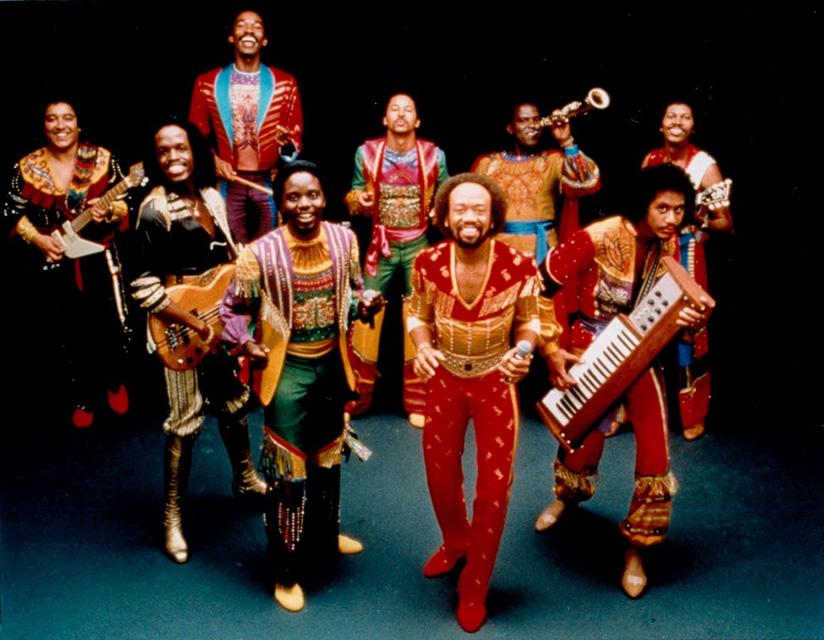
Long before Clive Davis became the symbol of executive-driven music, he played a role in helping expose Earth, Wind & Fire to a larger audience. The group had already been discovered by football legend Jim Brown, who recognized their talent early. Davis helped bring corporate muscle, promotion, and visibility. He helped place one of the greatest Black American bands ever assembled before a global audience.
For that, he deserves credit.
But history has a cruel sense of irony.
The very philosophy Clive Davis later perfected at Arista Records would eventually create an industry where a band like Earth, Wind & Fire could never thrive in the same way again.
Earth, Wind & Fire represented everything the modern music industry would gradually abandon. They were musicians before they were celebrities. Gospel harmony, jazz sophistication, funk rhythms, African diasporic traditions, and live instrumentation were the roots of their music. Their records featured horn sections, percussionists, arrangers, composers, background vocalists, and some of the finest musicians of their generation. Their music sounded like a community working together.
The model that emerged during the Clive Davis era increasingly rewarded something different. Individual stars became more valuable than bands. Marketing became more important than musicianship. Image became more important than development. Executives became more influential than artists. By the time the 1980s arrived, many of the groups that had defined the previous decade struggled inside a business that no longer valued what made them great.
That contradiction sits at the center of Clive Davis’ legacy.
He helped introduce audiences to some of the greatest music ever recorded. He also helped build the system that made that kind of music increasingly impossible.
The transformation did not happen overnight. It happened gradually.
When Davis entered Columbia Records, he was not a musician. He was not a producer. He did not write songs. He didn’t lead a band. His profession was a lawyer. A Harvard-educated attorney who entered the music business through the legal department and steadily climbed the corporate ladder.
For most of music history, that would have been an unusual path to power. The people who traditionally shaped music were musicians. Producers often began as musicians. Arrangers were musicians. Bandleaders were musicians. Even many record executives emerged from direct involvement in musical communities.
Davis represented something new: the rise of the executive class.
He represented the strategist, the manager, the corporate architect. Once executives became the primary decision-makers, the business gradually stopped asking what music needed and started asking what the market needed. Those are not the same question.
One reason Clive Davis remains such a polarizing figure is that his career was effectively divided into two acts. The first Clive Davis was the ambitious Columbia Records executive who rose from the legal department to become one of the most powerful men in the music business. The second Clive Davis was the executive who emerged after the scandal that nearly ended his career and went on to build Arista Records into a corporate powerhouse.
Modern obituaries usually only touch on the controversy briefly. The contemporary reporting tells a much more complicated story.
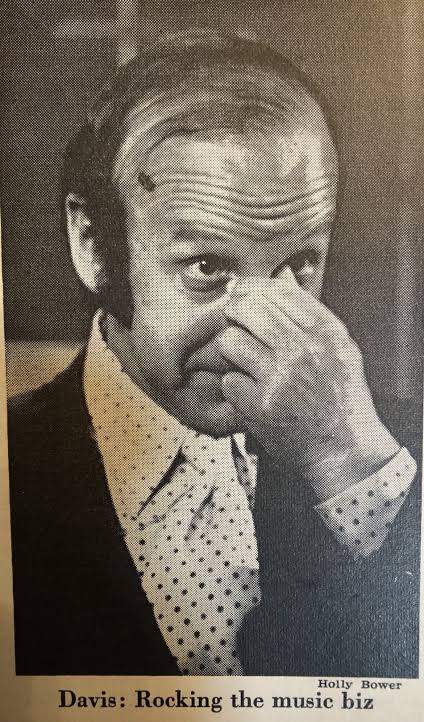
In 1973, journalist Maureen Orth published an explosive investigation titled The Specter of Payola ’73: Clive Davis. The article examined allegations involving expense-account abuses, radio promotion practices, and the broader culture of corruption that had long existed within the music industry. According to the reporting, CBS accused Davis of improperly charging personal expenses to the company, including apartment renovations, a Beverly Hills residence, and expenses connected to his son’s bar mitzvah. The amount under dispute approached $100,000, a substantial sum for the era. The investigation also examined allegations involving falsified invoices, gifts, favors, radio promotion practices, and relationships between record labels and radio stations.
Whether Davis was a scapegoat, a participant, or something in between remains debated decades later. Davis maintained that many of the practices under scrutiny were common throughout the industry and that he had been unfairly targeted.
The larger lesson is not that Clive Davis was uniquely corrupt.
The larger lesson is that he was operating inside an industry where corruption had become normalized.
This distinction matters because discussions of music history often focus on individual villains while ignoring the system itself. As Frederic Dannen documented in Hit Men, the record business was filled with executives who operated in a world where payola, intimidation, manipulation, and corporate gamesmanship were often considered part of doing business. Davis was not an exception to that culture. He was one of its most successful products.
The real issue is not whether Clive Davis charged personal expenses to CBS.
The real issue is what happened after he returned.
When Davis arrived at Arista, he increasingly represented a new philosophy about music. Under the older model, record companies found artists who had already proven themselves. The artist built the audience. The executive amplified the audience. The label’s job was promotion, distribution, and support.
To understand the philosophical divide that would eventually shape the modern music business, it is important to understand the relationship between Clive Davis and Walter Yetnikoff. The two men were not outsiders looking in at one another’s careers. They emerged from the same corporate environment at CBS Records and spent years working within the same system before becoming representatives of two different visions for the future of the industry.
During the late 1960s and early 1970s, Clive Davis rose rapidly through Columbia Records, eventually becoming president of CBS Records. Walter Yetnikoff was also climbing the corporate ranks at CBS during the same period. Both men were ambitious, intelligent, and fiercely competitive. Both understood the business side of music better than most of their peers. But after Davis was forced out of CBS in 1973 following the scandal that engulfed his presidency, Yetnikoff’s influence expanded dramatically. Within a few years, Yetnikoff would become president and later chairman of CBS Records, effectively inheriting the corporate empire that Davis once controlled.
The transition represented more than a change in leadership. It highlighted two competing philosophies about what a record company should be.
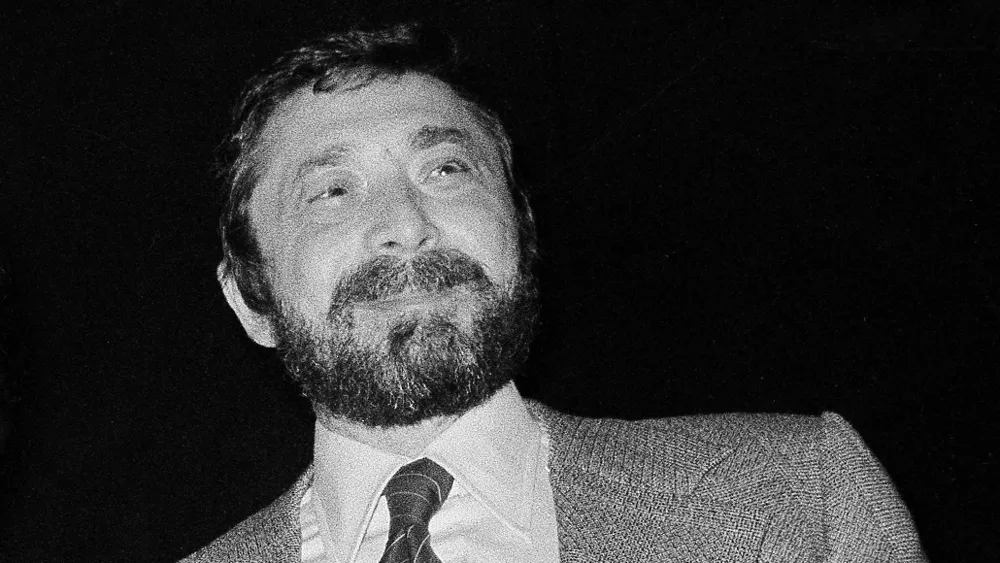
Yetnikoff was hardly a romantic traditionalist. He could be ruthless, profane, and intimidating by his own admission. Yet at his core, he believed the record company’s job was to recognize momentum that already existed and use corporate resources to amplify it. In his view, great artists created their own gravity. The label’s responsibility was to provide distribution, promotion, radio support, and marketing muscle once that gravity had already been established. Whether it was Bruce Springsteen, Billy Joel, Michael Jackson, or others under the CBS umbrella, Yetnikoff generally viewed the artist as the primary creative force and the label as a powerful support system.
Clive Davis increasingly represented a different model. While he certainly signed talented artists, his approach evolved toward a more executive-driven form of artist development. The executive was no longer merely supporting the artist; the executive became increasingly involved in shaping the artist. The image could be refined. The sound could be adjusted. The producers could be selected. The songs could be chosen. The crossover strategy could be engineered. The executive became an active participant in the creation of the commercial product.
The distinction may seem subtle, but it would have enormous consequences for the future of the music industry. One philosophy assumed greatness already existed and needed amplification. The other assumed greatness could be curated, packaged, and strategically constructed. By the 1980s and 1990s, the industry increasingly embraced the latter approach, and no executive symbolized that transition more than Clive Davis.
Clive Davis increasingly embraced a different approach.
The artist could be curated.
The sound could be curated.
The image could be curated.
The audience could be manufactured.
The executive became part marketer, part producer, part image consultant, and part cultural gatekeeper.
This distinction may sound subtle, but it transformed the industry. One model assumes greatness already exists and helps it grow. The other assumes greatness can be engineered. Modern music largely chose the second path.
The clearest example of this transformation was Whitney Houston.
No criticism of Whitney Houston can diminish her greatness. She remains one of the most gifted vocalists ever born. Her voice was extraordinary. Her lineage stretched directly into the Black church tradition. She emerged from a family deeply rooted in gospel music and carried within her the musical DNA of generations of Black American singers.
But what Clive Davis recognized was not merely Whitney’s talent.
Whitney Houston became the clearest expression of the philosophy that would come to define Clive Davis’ influence on modern music. No criticism of Whitney can diminish her greatness. She remains one of the most gifted vocalists ever born, a singer whose voice carried the power, precision, and emotional depth of the Black church tradition that produced her. Raised in a family deeply rooted in gospel music, Houston possessed not only extraordinary talent but also a direct connection to one of the richest musical lineages in American history.
What Clive Davis recognized, however, was not simply Whitney’s talent. He recognized a formula.
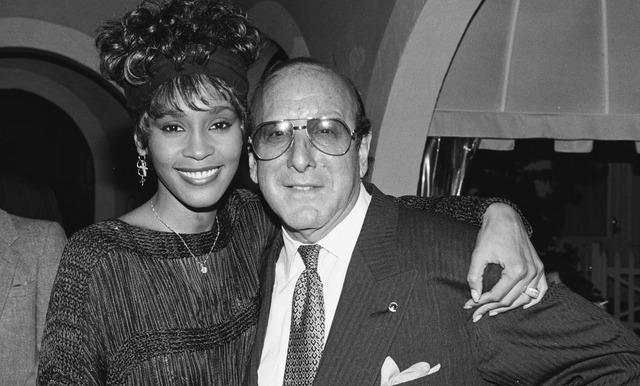
According to numerous accounts from those involved in her early career, Davis envisioned Whitney not primarily as a soul singer but as a crossover phenomenon capable of reaching audiences far beyond Black radio. The goal was not merely to introduce the world to Whitney Houston; it was to package Whitney Houston in a way that would maximize her appeal to mainstream audiences. The gospel influences could be softened. The funk influences could be minimized. In Whitney Houston’s documentary, Davis recalls hearing some of the music Whitney was interested in recording and explicitly stating that he did not want her singing “that George Clinton Parliament funk.” The message was clear: the closer Whitney remained to the traditions that produced her, the narrower executives believed her commercial appeal would be.
The strategy worked. Whitney Houston became one of the biggest stars in modern music history. Her records sold by the millions. She crossed every demographic boundary imaginable and became one of the most recognizable voices on the planet. From a business standpoint, the formula was brilliant.
From a cultural standpoint, the results were more complicated.
As Whitney’s fame grew, many Black listeners began to feel increasingly disconnected from the version of Whitney Houston being presented to the public. The tension reached a breaking point at the 1989 Soul Train Awards, where portions of the audience booed her nomination. Contrary to how the moment was often portrayed in mainstream media, many Black fans were not rejecting Whitney Houston herself. They were reacting to what they viewed as an increasingly sanitized and crossover-oriented presentation of an artist whose roots were firmly grounded in Black musical traditions.
Whitney herself appeared to understand the criticism. Following the Soul Train controversy, she fought for greater creative control over her music. That shift became visible on her 1990 album I’m Your Baby Tonight, which moved noticeably closer to contemporary Black music and featured producers such as Babyface, L.A. Reid, Luther Vandross, and Stevie Wonder. The title track, often described as the first major single Whitney personally pushed for, represented a conscious effort to reconnect with the audience that felt increasingly alienated by her earlier crossover image.
Whitney Houston’s success should have taught the industry that extraordinary talent transcends boundaries. Instead, the industry learned a different lesson. Executives looked at Whitney Houston and concluded that culture could be separated from talent. They concluded that the voice could be preserved while the traditions that produced the voice could be minimized. They concluded that Black musical excellence could be marketed globally while gradually reducing the visible influence of the Black institutions that had nurtured it.
That distinction changed the course of popular music.
For generations, Black American artists had crossed over without abandoning their foundation. Ray Charles carried gospel into popular music. Aretha Franklin carried gospel into popular music. Al Green carried gospel into popular music. Stevie Wonder carried gospel into popular music. Earth, Wind & Fire carried gospel-infused musicianship into popular music. The audience expanded, but the foundation remained intact.
The Clive Davis model increasingly reversed that equation. The commercial appeal remained, but the foundation became less important. What emerged was a new type of artist: commercially universal, globally marketable, and increasingly disconnected from the musical institutions that had historically shaped Black American music.
The industry embraced this model because it generated enormous profits. Yet the long-term consequences extended far beyond Whitney Houston. The most significant criticism of Clive Davis’ legacy is not that he promoted pop music. Every generation produces pop music. The criticism is that the version of pop he championed increasingly removed the gospel foundation that had historically powered Black American music.
For most of the twentieth century, gospel functioned as far more than a genre. It was the training ground for singers, musicians, arrangers, composers, and performers. It was the educational system of Black American music. The church taught discipline. It taught harmony. It taught improvisation. It taught stage presence. It taught musicians how to listen, respond, and create collectively.
When that foundation weakened, the consequences rippled throughout the industry. Horn sections gradually disappeared. Background vocal groups became less common. Live drummers gave way to drum machines. Bands were replaced by solo artists. Artist development gave way to image development. Increasingly, musicians were replaced by programmers, marketers, branding specialists, and executives. What had once been a musical ecosystem became a commercial ecosystem.
The average listener rarely noticed the transformation because it occurred gradually over decades. A horn section disappeared from one record. A gospel choir disappeared from another. Live rhythm sections became less common. Bands became less central. Each individual change seemed small. Taken together, they fundamentally altered the sound of popular music.
What many listeners describe today as a flatness in modern music is often the sound of those missing foundations. They are hearing the absence of the church, the absence of live musicianship, and the absence of the communal musical traditions that once stood at the center of Black American music.
Entire ecosystems of musicians quietly vanished.
The average listener rarely noticed because the changes happened incrementally. A horn section disappeared here. A live rhythm section disappeared there. A gospel choir became layered studio vocals. A band became a singer standing in front of programmed tracks.
Each individual change seemed insignificant.
Collectively, they transformed popular music.
Many critics of modern R&B and pop are ultimately reacting to this shift whether they realize it or not. What they describe as a flat sound is often the sound of music that has become disconnected from the church traditions, musical training, and live performance culture that once sustained it.
The music industry often celebrates the artists Clive Davis helped. Far less attention is paid to the artists who believed the system worked against them.

Over the years, singers such as Miki Howard publicly criticized aspects of the industry and questioned why artists who built labels and genres were often discarded while executives accumulated wealth and influence. Other artists, including Angela Bofill, Betty Wright, and Phyllis Hyman, became symbols for many critics who argued that the industry had little use for artists once they no longer fit a corporate strategy.
The point is not that Clive Davis personally caused every setback experienced by every artist.
The point is that he became the face of a system that increasingly rewarded marketability over musicianship and image over artistic depth.
Many artists felt they were being measured less by what they created and more by how easily they could fit a corporate blueprint.
By the time hip-hop emerged as the dominant commercial force in American music, the same philosophy was being applied to rap and R&B.
Davis played an important role in helping fund and distribute the Bad Boy empire through his Arista relationships. Sean Combs became the public face of the movement, but many observers viewed Davis as one of the powerful executives standing behind the scenes. The same was true of the broader ecosystem that included LaFace Records and the Atlanta-centered R&B machine that emerged during the 1990s.
This is where many conversations about the music industry become too simplistic.
The public often blames rappers, Black executives, and celebrity figures for everything that went wrong with modern music. What often gets overlooked is where many of those executives learned the business.
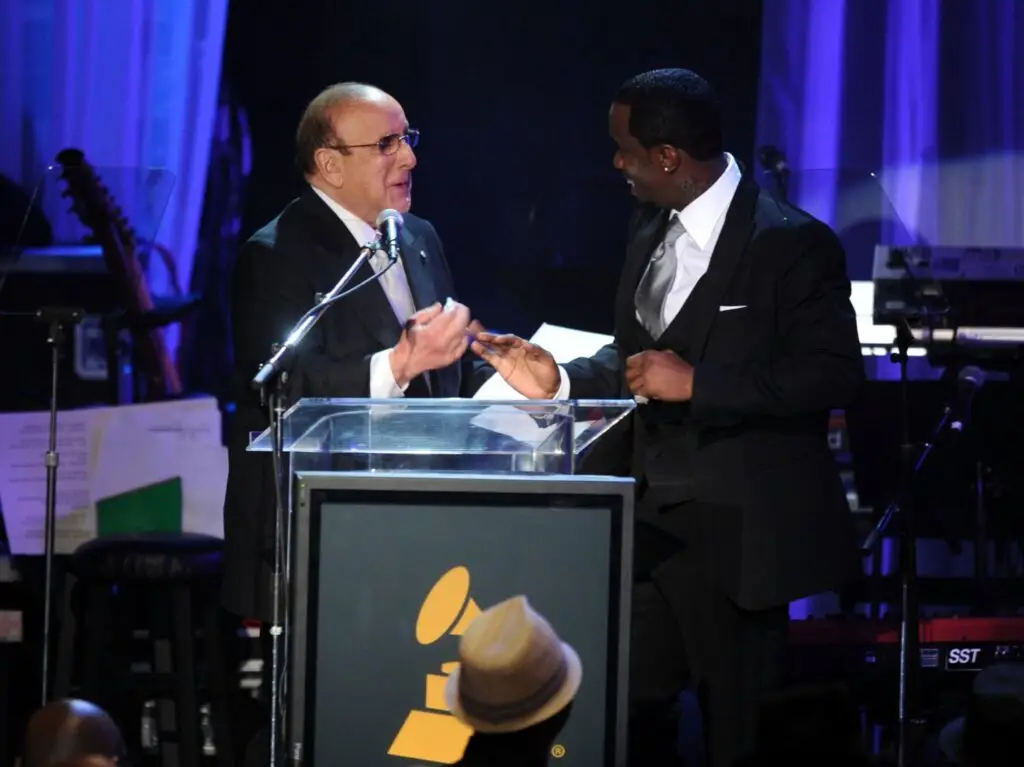
Diddy did not invent the executive-driven model.
He inherited it.
The emphasis on branding, celebrity, image management, and executive control did not begin with Bad Boy. It had been developing for decades. Davis did not create every trend that transformed music, but he became one of the most successful embodiments of those trends.
That is why his legacy matters.
If you want to understand how the music industry devolved from Earth, Wind & Fire, Parliament-Funkadelic, Curtis Mayfield, Betty Wright, live musicians, church-trained singers, and artist development down to an era dominated by branding strategies, executive curation, algorithms, and manufactured stardom, you eventually arrive at Clive Davis.
Not because he acted alone.
Not because he was uniquely responsible.
But because he became one of the most influential architects of the system that replaced them.
His supporters point to the stars he created.
His critics point to the traditions that disappeared during his reign.
Both observations are accurate.
Clive Davis helped create stars.
He helped sell millions of records.
He helped build some of the most successful careers in music history.
But he also helped normalize a philosophy that separated Black music from many of the institutions that created it. He helped elevate Earth, Wind & Fire to the world stage, yet the model he later championed contributed to a business where bands like Earth, Wind & Fire no longer fit the formula. He helped make crossover success the ultimate goal, even when that success came at the expense of gospel roots, live musicianship, and cultural depth.
When Clive Davis entered the music business, the church still sat at the center of Black American music. Bands still mattered. Musicians still mattered. Artist development still mattered.
When his era ended, executives sat at the center.
The stars were bigger.
The companies were richer.
The music was smaller.
And that may be the most important thing to understand about Clive Davis’ legacy.
Support Independent Music History
This article was published by Incense-N-Ashtrays, an independent media platform dedicated to documenting music, culture, and history from a Black American perspective.
Incense-N-Ashtrays proudly supports the Black Americans Music Family Tree Historical Foundation, a 501(c)(3) nonprofit organization dedicated to preserving, teaching, and documenting the Black American origins and evolution of American music.
To support the foundation’s educational programs, research, interviews, archives, and historical preservation efforts, visit:
To read more music history, cultural commentary, artist interviews, and documentary projects, visit:
incensenashtrays.com