
Who makes the instruments is an economic story. A post-war agreement handed Japan the electronics industry, American engineering supplied the blueprint, and Black American musicians supplied the sound that made the world’s studios buy Japanese.
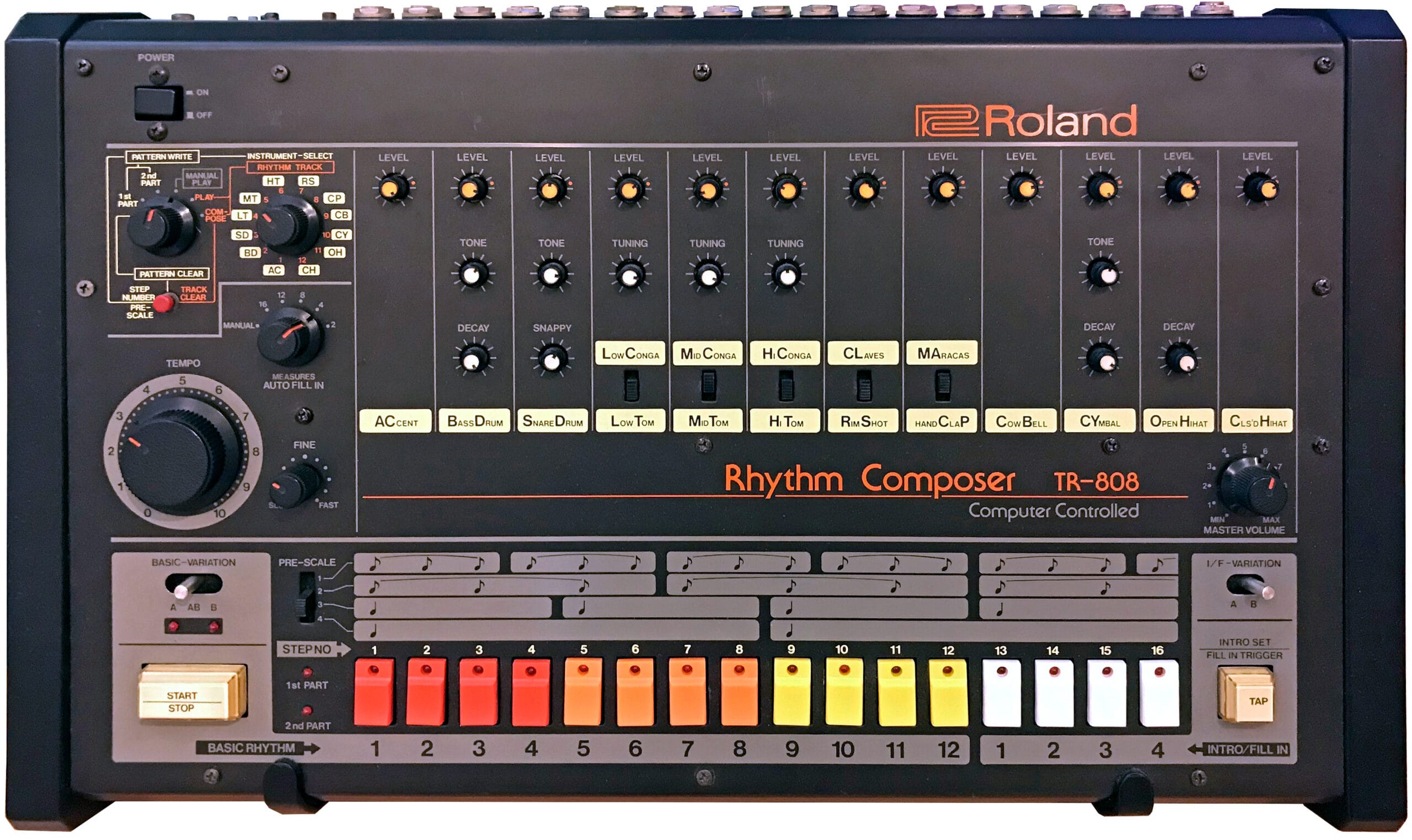
Look at the gear behind modern music and you will see Japan everywhere. The Roland TR-808 and TR-909. The Technics turntables hip hop was built on. Yamaha, Korg, Akai. Japan leads the world in music electronics — that is not a debate, and this is written with all due respect to Japan, because the craftsmanship is real.
But who makes the instruments is an economic question before it is a musical one, and the economics explain the whole picture. A post-war agreement decided who would build the world’s electronics. American engineering supplied the blueprint. And Black American musicians supplied the sound that made those instruments the standard in studios everywhere. Follow the money and the music together, and the story lines up.
The agreement that built the factory
Start with the deal, because everything else flows from it. After World War II, Japan was demilitarized. Under its new constitution it could not rebuild an army, and under the U.S.–Japan Security Treaty the United States agreed to provide Japan’s security. In exchange, Japan was steered into manufacturing — specifically electronics and precision technology. The Western powers invested in Japan’s rebuild, and that is where the Sonys, Panasonics, Mitsubishis, Hondas and Toyotas come from. You can call it reparations. You can call it strategy. What you can’t call it is spontaneous. Japan was handed the blueprint, the assignment, and the investment — a deliberate piece of post-war industrial policy.
Look at who didn’t get the same deal, and the choice becomes clearer. The Soviet Union took the worst of the war’s casualties and got nothing from the Marshall Plan. And look at home: the United States could have kept that technology in-house. It could have invested in the Black Americans who helped win the war and built the electronics industry on American soil. It chose Japan instead. So when you ask why Japan makes the world’s music electronics, the honest answer starts in Washington, not Tokyo. Japan executed the assignment brilliantly — but the assignment was American, and it was economic.
The instruments are rooted in American engineering
Even the machines themselves tell this story. The drum machine — the instrument at the center of hip hop production — was invented in the United States. The Chamberlin Rhythmate arrived in 1949, built by Harry Chamberlin in Upland, California, right outside Los Angeles. The Wurlitzer Sideman followed in the 1950s. Japan’s first entry, the Rhythm Ace, didn’t arrive until the 1960s — an American idea, taken up and refined by Japanese engineering.
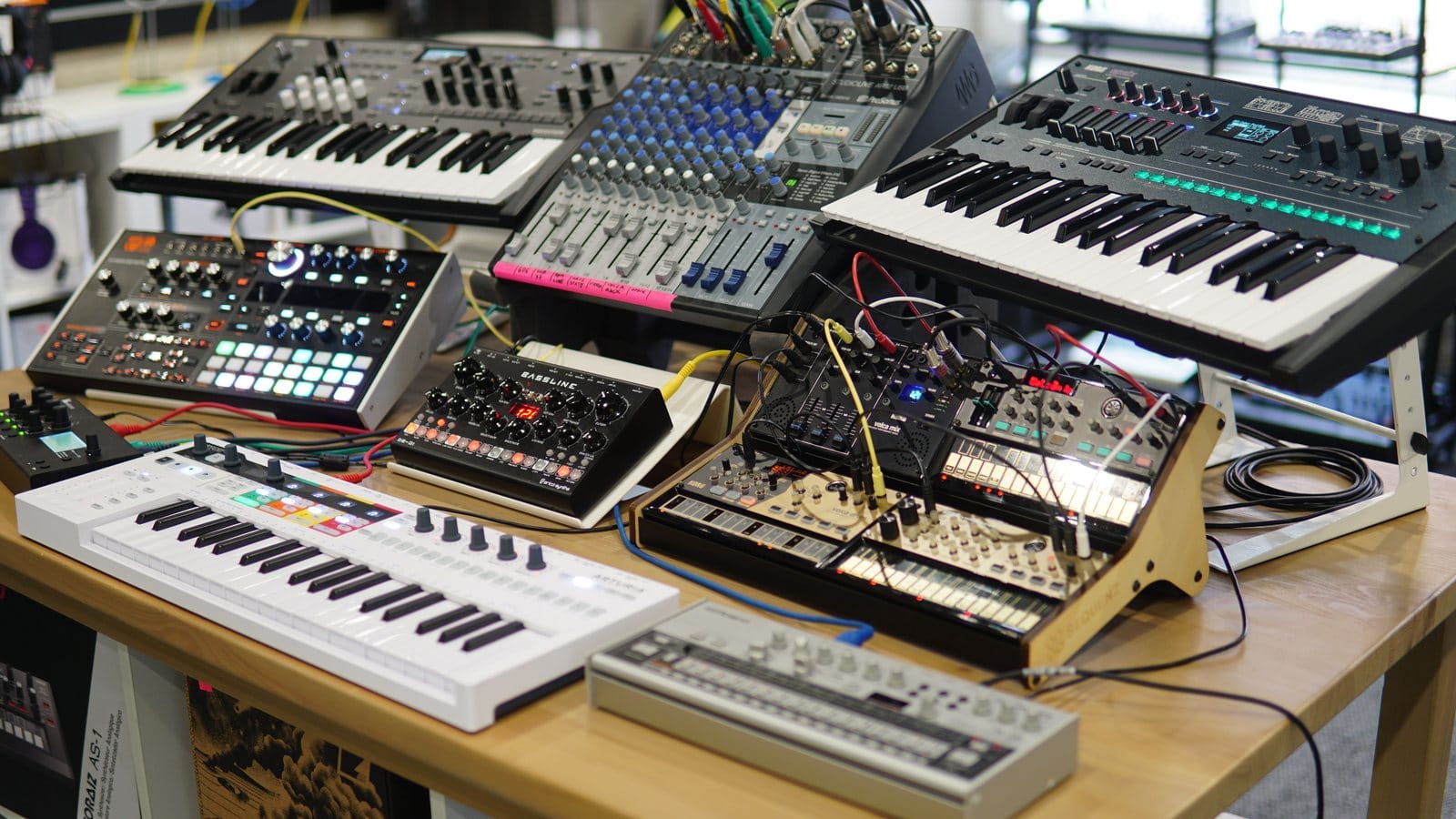
That is the pattern across music electronics. America designs; Japan perfects, miniaturizes and mass-produces. The synthesizer was an American invention — Moog, ARP — and the Japanese instruments that followed were plays on American designs, made reliable, affordable and available to the world. Even the Yamaha DX7, the best-selling synthesizer of the 1980s, ran on FM synthesis licensed from research done at Stanford University. The manufacturing crown is Japan’s. The roots are American. The two countries built this industry together — one supplied the engineering, the other supplied the factory.
This is not new: we have been flipping instruments for centuries
Here is the running theory behind my work on Black American music, and it holds everywhere you test it: Black Americans either invented the instrument full stop — or, when adopting instruments from Europe or Asia, Black American artists created the mold for how those instruments are used. The Japanese electronics are the latest chapter. The European instruments are the proof that the pattern is centuries old.
Take the piano. It was invented in Italy around 1700, a European parlor instrument. Black Americans turned it into the engine of ragtime, stride, blues, gospel and jazz — a percussive, rhythmic, improvising voice that its inventor never imagined. Take the saxophone: patented in Belgium in the 1840s as a classical and military band instrument. Black Americans made it the sound of jazz and R&B, the instrument the whole world associates with American music. Take the trumpet, a European orchestral voice — Louis Armstrong remade it into the lead voice of jazz. Take the violin, the fiddle: Black fiddlers were the dance musicians of early America, setting the sound of the country’s social music long before anyone wrote it down.
In every case the same thing happened. The instrument arrived from somewhere else. Black American artists played it in a way nobody had played it before, created the mold for how it is used, and the world copied the mold — not the manual. No matter who makes the instruments the world uses most, the use itself is ours. That is the theory, and the drum machine is simply the newest proof.
The mold, applied to Japanese electronics
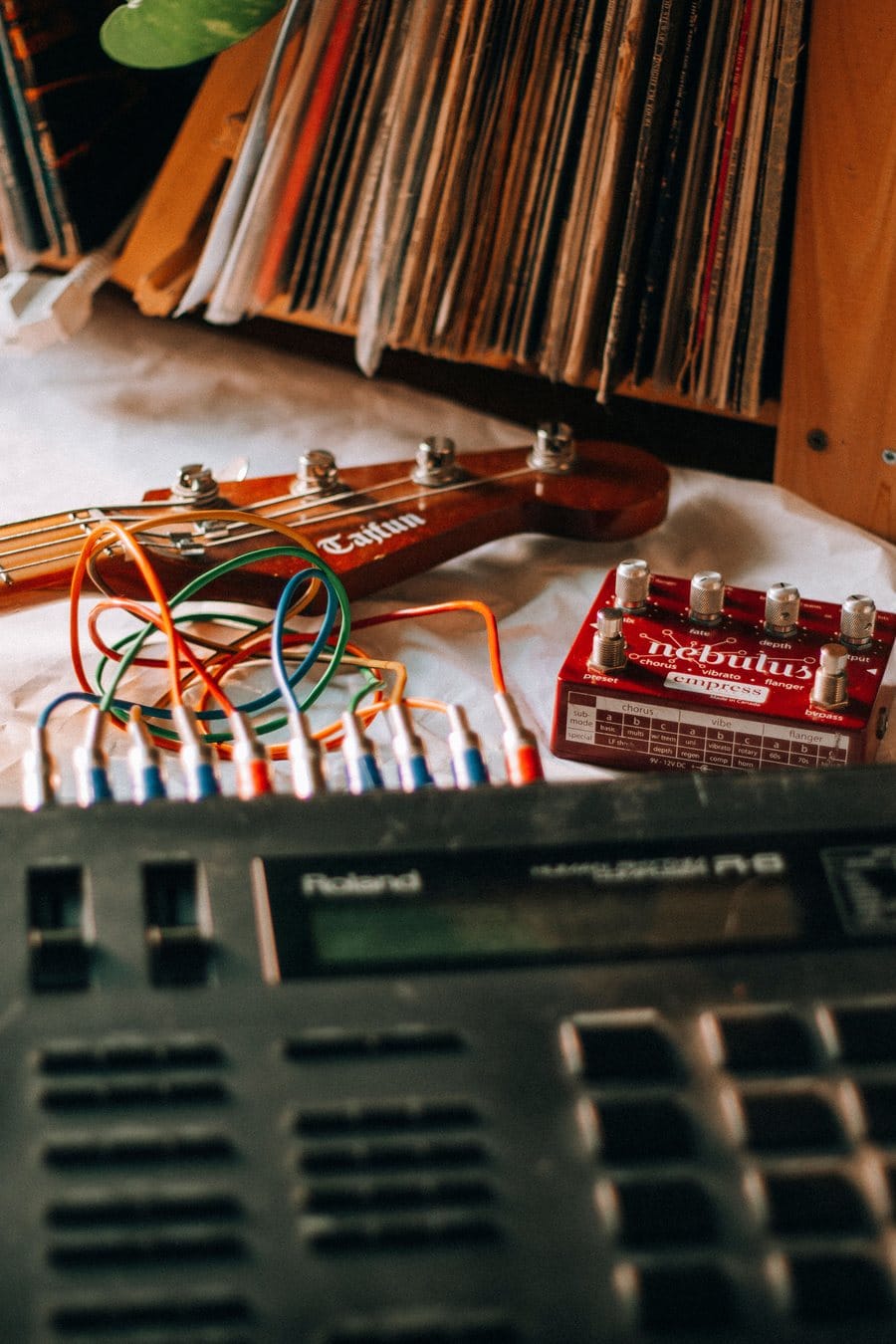
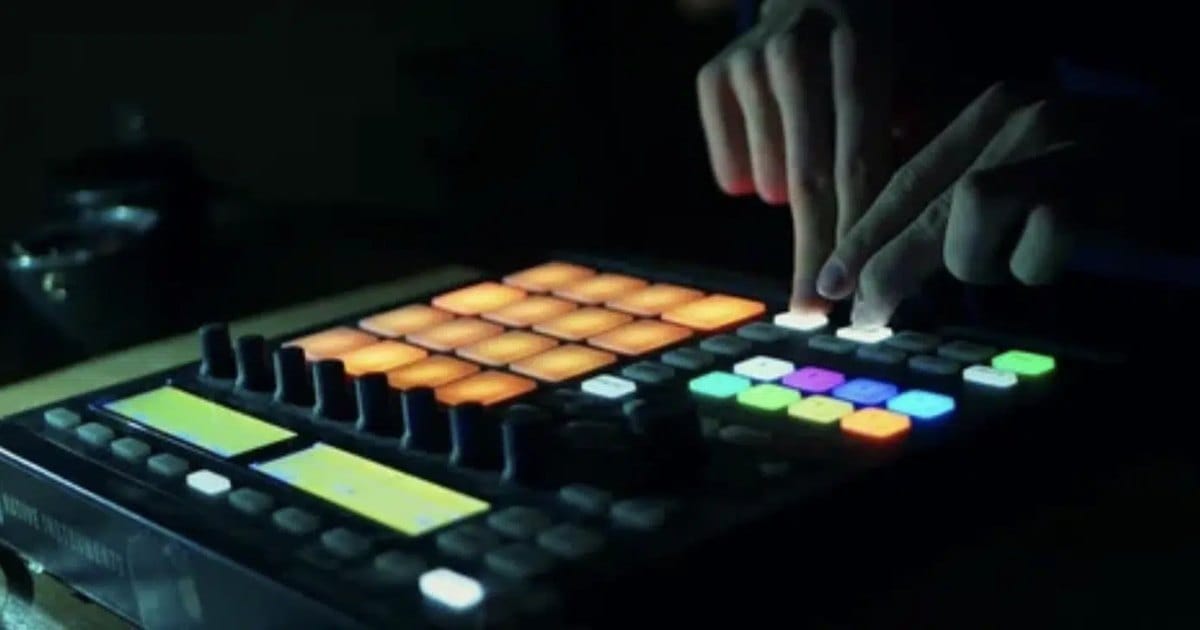
The earliest landmark use of a drum machine was Black American: Sly Stone, building records around the Maestro Rhythm King MRK-2 — an American machine — with live drums layered on top. Hip hop is a child of funk, and everything in it descends from that generation. Then came the synthesizer era, and there were no instructions worth the name. Somebody had to experiment, rewire, and solve for the frequencies and the layers, because music is a mathematical equation, not a button you push. That somebody was Stevie Wonder, first at every new instrument that came out. Herbie Hancock. Bernie Worrell of Parliament-Funkadelic, the first to use a foot pedal to alter a Rhodes keyboard. Prince. Larry Smith, who produced Whodini’s “Five Minutes of Funk” and made those harsh, loud electronic drums into a record. The R&B and funk producers figured the machines out, and hip hop inherited the answers. Even the machine’s highest art form proves the rule: J Dilla programmed drums like a drummer — because he was one.
And the mold still governs. A real drummer plays the hi-hat closed, cracked, wide open; moves to the ride cymbal and the whole song breathes. A snare hit is not just a hit — it’s how you hit it. You cannot program the pocket, and seventy years in, the drum machine still hasn’t caught up to the 1970s drum set. That is why everybody still samples live drums from the 1970s, and why every programmer works so hard to make the machine sound like a real kit. James Brown stacked drummers to fatten a snare. Maurice White stacked finger snaps and wood claves on Earth, Wind & Fire records. Today drummers like Chris Dave play attack-stack cymbals that mimic a programmed snare — the acoustic instrument answering the machine, in a language the machine learned from us. The standard is still Black American musicianship. The machines are chasing it.
The economics: Black creativity boosts both economies
This is where the story becomes an economic one, and it is the part that gets left out. Black creativity is an economic engine — for the United States and for Japan both.
On the American side, Black American music is one of the country’s great exports. The sound sells records, tours, films and fashion around the world, and it has for a century. The 808 sound that Black producers built into hip hop became the sound of global pop — which means American culture, exported at scale, with American artists at the center of it.
On the Japanese side, the machines became the world standard because Black musicians made them sound irresistible. An instrument nobody wants to play is a warehouse full of unsold inventory. But when Sly Stone, Stevie Wonder, Prince and a generation of hip hop producers played Japanese machines in a way the world had never heard, every producer on earth wanted that sound — and the only way to get it was to buy Japanese. That demand is what turned Roland, Yamaha, Korg and Technics into global brands. Black creativity brought Japan’s creations and innovations to life, and in doing so it built Japan’s music-electronics economy. The demand was created by use, not by advertising: musicians heard the records, wanted the sound, and bought the instruments.
And there is a third economic force in the mix: the machines made production cheaper. Twelve musicians cost more than one beatmaker, so the record industry pushed the electronics hard in the 1980s — bands like Cameo had to shrink to survive the transition — and cheaper production meant more people could make records, which meant more instruments sold. Everybody in the chain benefited from the spread. But the spread only happened because the sound was worth chasing, and the sound was Black American.
So the economics cut both ways, and both ways run through the same people. America exports the music; Japan exports the hardware; the bridge between them is Black musicianship. Japan got the factory by treaty. America supplied the engineering. Black America supplied the reason anybody wanted the product in the first place.
Respect to Japan — the fight isn’t with them
Let the record also show: Japanese people are not the ones erasing any of this. Japan has been, by and large, deeply respectful of Black American music and its musicians. Roland built some great machines, and credit for building them is fair. But building the tool is not authoring the music. The world wanted to sound like the musicians who played those machines — and those musicians were Black Americans.
This is our music. We have to defend our culture and our contributions at all costs, because a people whose contributions get erased are a people who can be erased off the map of human history. There are no perfect messengers. The only perfect message is for those willing to pick up the game.
Watch the full show
Related Reading