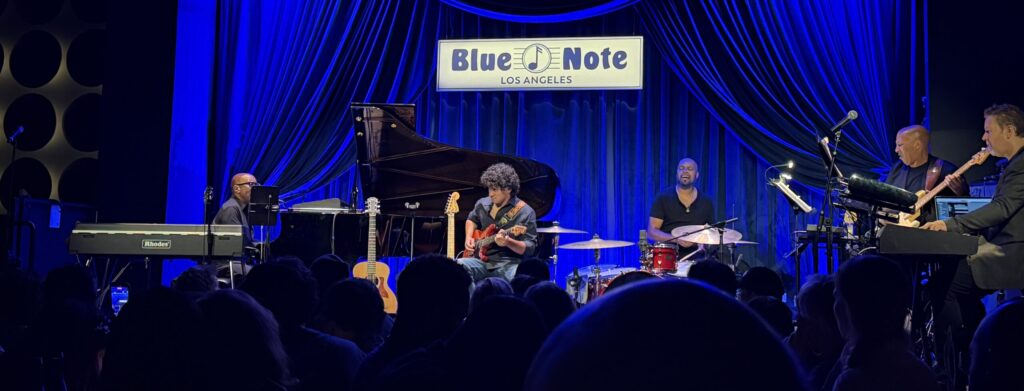

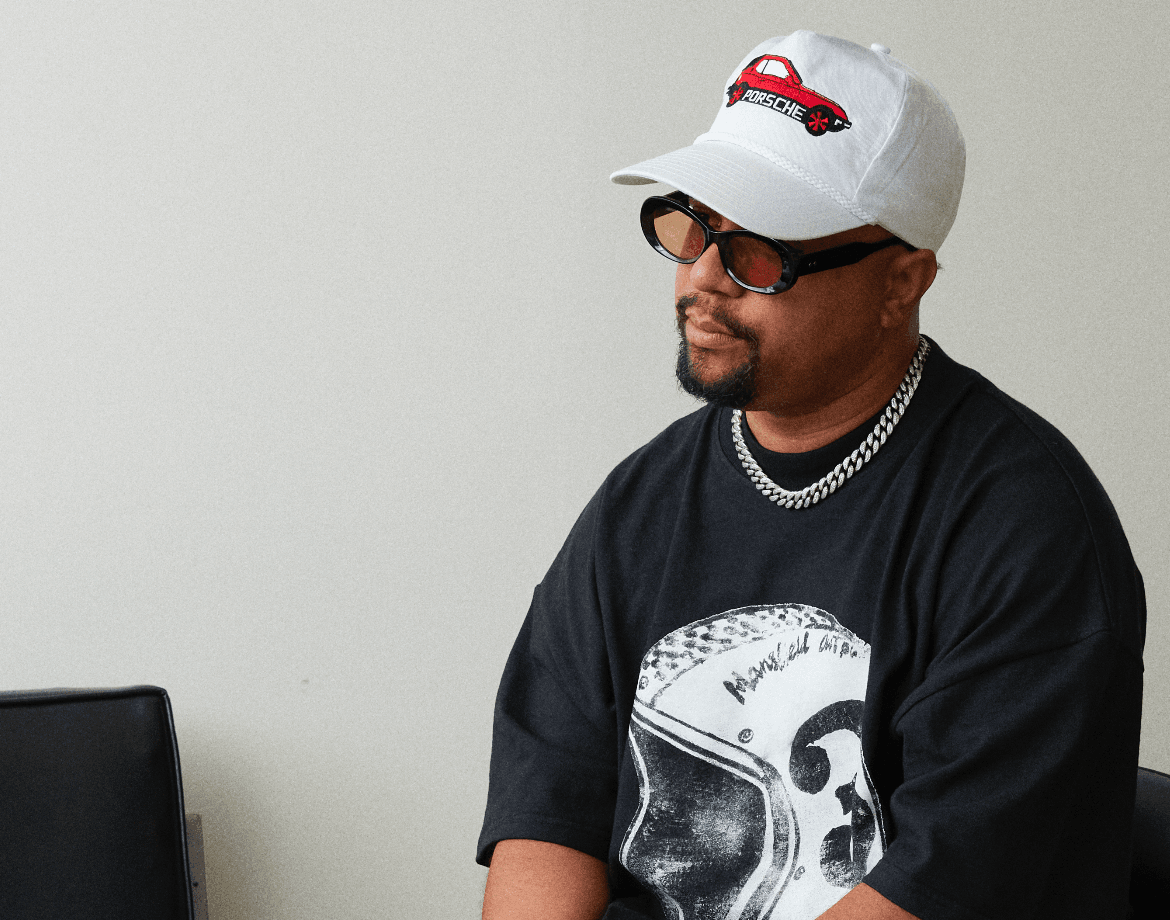
From Battlecat and Dr. Dre to Thundercat, Flying Lotus, Mac Miller, and film scoring, Taylor Graves is one of the versatile musicians shaping modern music from just beyond the spotlight.
There are musicians whose names lead the marquee, and there are musicians whose fingerprints turn up all over the records that define an era. Taylor Graves belongs in the second group—though after sitting down with him for IncenseNashtrays Live, it is clear that his own name deserves much more attention.
Graves is a pianist, vocalist, producer, composer, and film scorer whose work moves across R&B, jazz, hip-hop, experimental music, television, and film. He has collaborated with Thundercat, Flying Lotus, Kamasi Washington, Kimbra, Leon Ware, Dr. Dre, and Mac Miller. He is also part of an exceptional Los Angeles musical family, alongside his brother, pianist Cameron Graves.
The most revealing part of our conversation, however, was not the list of credits. It was hearing Taylor explain the culture, craft, and musical curiosity that made those collaborations possible.
A Los Angeles musical childhood

Graves grew up in a household where musical boundaries were never treated as fixed. His father, Carl Graves, had a solo hit with “Baby Hang Up the Phone,” was a member of the Canadian group Skylark alongside David Foster, and later played keyboards with Oingo Boingo. At home, that professional life sat alongside deep listening: John Coltrane, Kool Moe Dee, Bobby “Blue” Bland, Jackie Wilson, blues, R&B, punk, and classical piano.
His mother’s Hungarian background brought classical music and pianists such as Vladimir Horowitz into the mix. Before Taylor had the words to describe his own sound, he was already learning that music could be sophisticated without being stiff, popular without being shallow, and experimental without losing feeling.
Taylor and Cameron began piano lessons as children at Yamaha Music in Sherman Oaks, where their teacher recognized both brothers had perfect pitch. The gift mattered, but it was only a beginning. Their real education was an ecosystem of young Los Angeles players at Hamilton High School’s music academy. Kamasi Washington was ahead of them in the school’s top band; Thundercat, then Stephen Bruner, was part of the same larger circle.
These were not stars being assembled by a label. They were young artists learning, rehearsing, and developing a language together. The music now associated with the West Coast Get Down did not come out of nowhere. It was built through years of musicians playing in one another’s rooms, absorbing each other’s influences, and learning how to make complexity feel alive.
Beyond the categories
Graves started making beats as a teenager, determined to bring his classical training and jazz vocabulary into production. He is a pianist first, but identifies himself as a vocalist second—an important distinction when you hear how his falsetto and background vocals function as part of an arrangement.
George Duke is a major influence, especially Duke’s ability to make falsetto an unmistakable lead voice rather than a decorative effect. Graves also points to Duke’s range: he could move from funk to pop songwriting to futuristic keyboard textures without abandoning his identity. That is a useful key to Taylor’s work. He does not change genres just to prove he can. He carries a personal musical logic into every space he enters.
That logic includes the music of his childhood. Before he knew who Battlecat was, Graves heard records like “We Can Freak It” on the way to school and knew that he loved their feel. Later, he recognized Battlecat as one of his great production heroes, alongside J Dilla and Timbaland. For Graves, West Coast hip-hop, jazz fusion, sci-fi, video games, anime, orchestral film music, rock, and R&B are not unrelated reference points. They are all ingredients.
The Bruner-Graves sound
The interview gets especially rich when Graves talks about his work with Thundercat. Taylor contributed to “Daylight” and “Fleer Ultra,” two records from Thundercat’s early solo catalog that helped introduce listeners to an elastic, emotionally direct, hard-to-categorize sound.
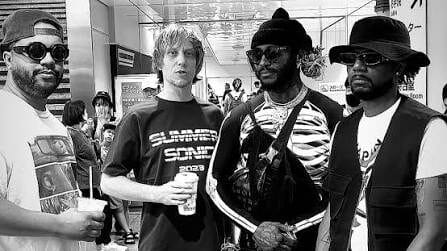
“Daylight” is a perfect entry point: brief, melodic, off-center, and rooted in R&B feeling even as the arrangement moves with the unpredictability of progressive music. Graves explained that he and Bruner were inspired by J Dilla’s compact, repeat-worthy approach on Donuts: leave the listener wanting another pass through the idea.
When asked what to call this music, Graves acknowledged the label “progressive R&B,” then offered a better answer: the “Bruner-Graves sound.” That is a useful historical point. Scenes and sounds are often remembered through the people who identify and define them. The Bruner-Graves sound draws on classical music, fusion jazz, metal, rock, Sega-era digital textures, cinema, and Black American R&B. It is adventurous, technically advanced, sometimes funny, and never afraid to be emotionally open.
Graves speaks about Thundercat not only as a virtuoso bassist but as an endlessly curious person whose knowledge of music, anime, games, and culture expands the possibilities in the room. That curiosity is central to the work. These records do not sound futuristic because they use unusual chords or expensive gear. They sound futuristic because the musicians making them refuse to limit their imagination to one approved set of references.
Learning in rooms with masters
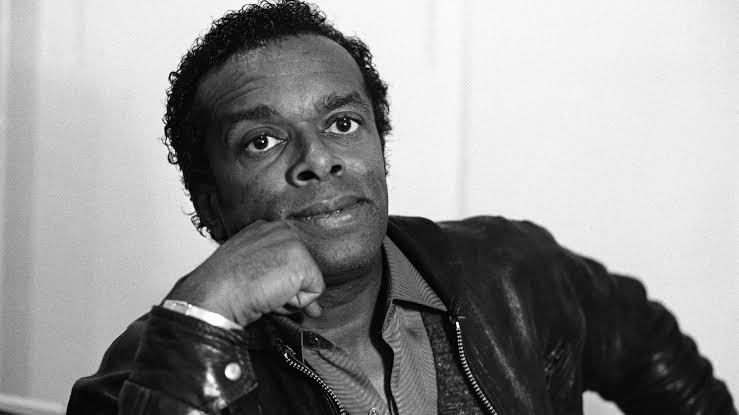
Taylor’s career is also a reminder that mentorship in music does not always come packaged as a formal lesson. He worked closely with the late Leon Ware, the songwriter and producer behind some of the most sensual and cinematic R&B of the last half-century. What began as technological assistance—helping Ware navigate newer recording tools—developed into production and songwriting work. Graves co-produced Ware’s final album, Rainbow Deux.
Ware’s music understood that a record could create an entire emotional environment before the vocalist even entered. That cinematic sense of atmosphere is audible in Graves’s work with Flying Lotus and Thundercat.
His time around Dr. Dre offered another kind of education. Graves recalls a studio designed for ideas to move quickly: MPCs linked together, individual workstations, musicians and producers building tracks while Dre directed the session. The lesson was not that experimentation was unwelcome. It was that a producer must recognize a working formula, understand the emotion it creates, and know when to commit to it.
From the studio to the screen
Graves’s work in film and television is another expression of the same musical mind. He co-scored Jada Pinkett Smith’s 2008 film The Human Contract with Cameron Graves. More recently, he scored the 12-episode animated series Young Love, an extension of the Oscar-winning short Hair Love, and contributed additional music to Hair Love.
He describes scoring as a space for adventure. A score asks the composer to interpret emotion, pacing, character, and silence. On smaller projects, that can mean building orchestral mock-ups through software. On larger productions, it can mean working with arrangers, engineers, copyists, sound stages, and live musicians. Either way, the composer has to make choices that serve the story.
That work explains why Graves’s production feels so visual. He thinks in scenes, motion, color, and atmosphere. He does not simply stack chords behind an artist; he builds a world for the artist to inhabit.
The work ahead
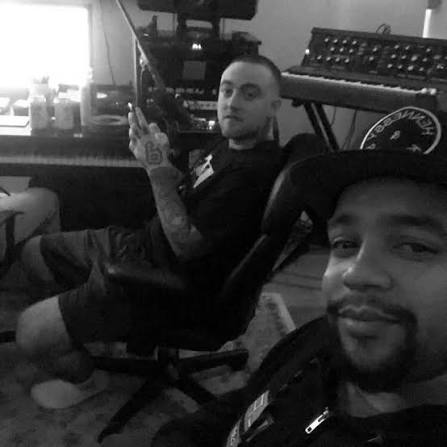
Graves is focused on building ownership alongside his creative output. He has signed a publishing deal, speaks plainly about the importance of equity and publishing for an artist’s future, and is planning more film and television work. He also discussed plans for a solo album and instrumental project, as well as forthcoming music connected to Thundercat, Mac Miller, and Channel Tres.
Taylor Graves is not simply a musician with an impressive past or a supporting figure in somebody else’s story. He is part of a living Los Angeles tradition: artists trained deeply enough to honor the music that came before them, but imaginative enough to move it somewhere else.
The mainstream will not always introduce listeners to the people making its most compelling music. If you know Taylor Graves only as a name in the credits, the full interview gives you the person behind the sound: a serious musician, a generous collaborator, and an artist whose range is matched by a real point of view.
Watch the full Taylor Graves interview on the IncenseNashtrays YouTube channel.
For more artist interviews, music history, and cultural criticism, visit incensenashtrays.com.