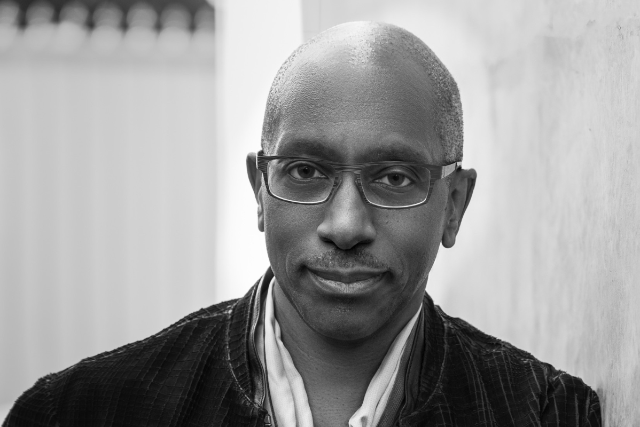
Stevie Wonder. Michael Jackson. Lionel Richie. Quincy Jones. James Ingram. Donald Fagen. George Benson. Eric Clapton. What do all these artists have in common? Greg Phillinganes.
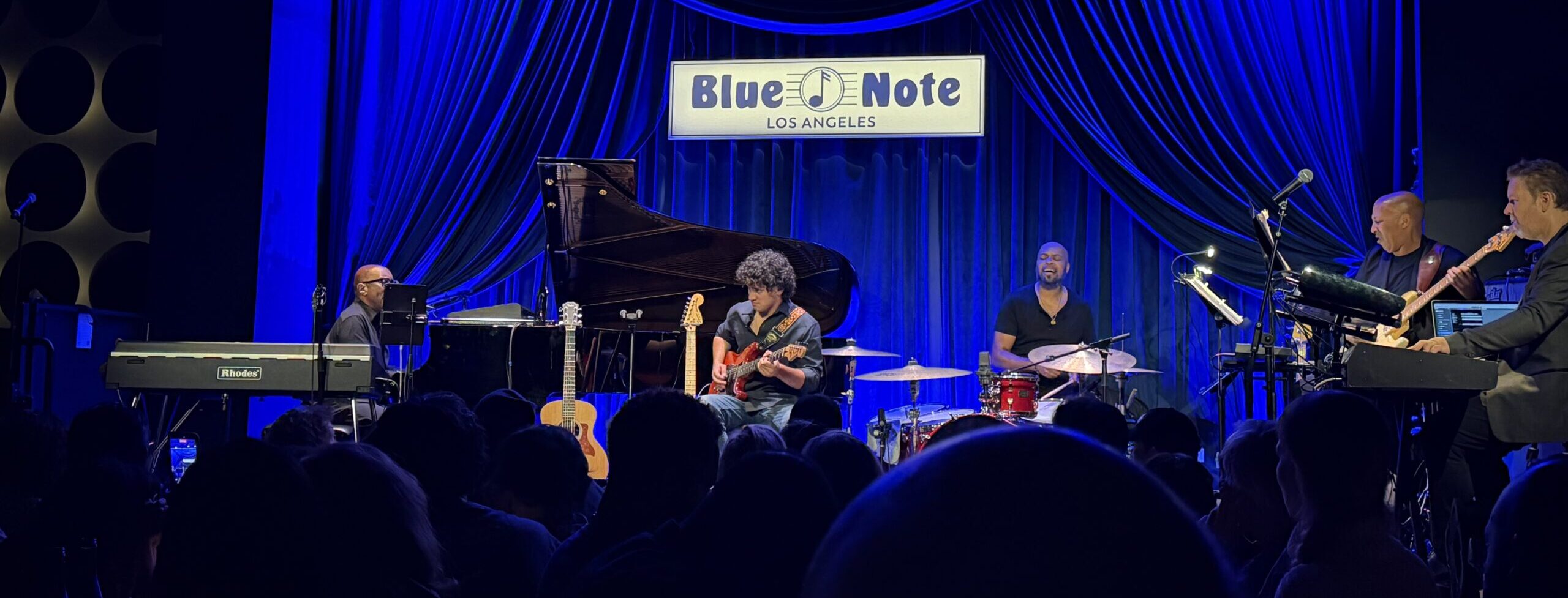
One of the most recorded and versatile keyboardists in popular music, Phillinganes has spent more than five decades contributing to recordings that became the soundtrack of our lives. I attended his Stories and Music performance at Blue Note Los Angeles, and left thinking about how rarely we celebrate the musicians behind the artists whose names appear on album covers.
There are musicians who can play, and then there are musicians who can walk into almost any musical situation, understand precisely what it needs, and deliver. Jazz, funk, R&B, rock, pop, fusion—Greg understands the language of all of them. What separates him isn’t just technique. It’s taste: knowing when to play, what to play, and when to leave space.
One of the best things Greg said during the concert was that he wanted us to think of him as our “human liner notes.” I loved that. Those of us who grew up buying albums read the credits. We wanted to know who played the bass, who arranged the strings, who produced the record, and who delivered the solo we couldn’t get out of our heads.
Today millions hear recordings without knowing who created their defining sounds. Greg’s show offered something increasingly rare: the stories directly from a musician who was in the room.
Greg grew up in Detroit convinced that one day he’d play with Stevie Wonder. Drummer Ricky Lawson helped make that possible by encouraging him to record an audition cassette, which included Greg playing Stevie’s “You Are the Sunshine of My Life.” According to Greg’s account, Stevie eventually listened to the tape and wanted to meet him.
At the original Hit Factory in New York, Greg waited nervously for Stevie to arrive. He described their first handshake as life-changing. Stevie tested him on a composition that later became Ramsey Lewis’s “Spring High.” After a further audition with Wonderlove, Stevie asked Greg how it felt to be a member of the band. Greg asked Stevie to call his mother to confirm it.
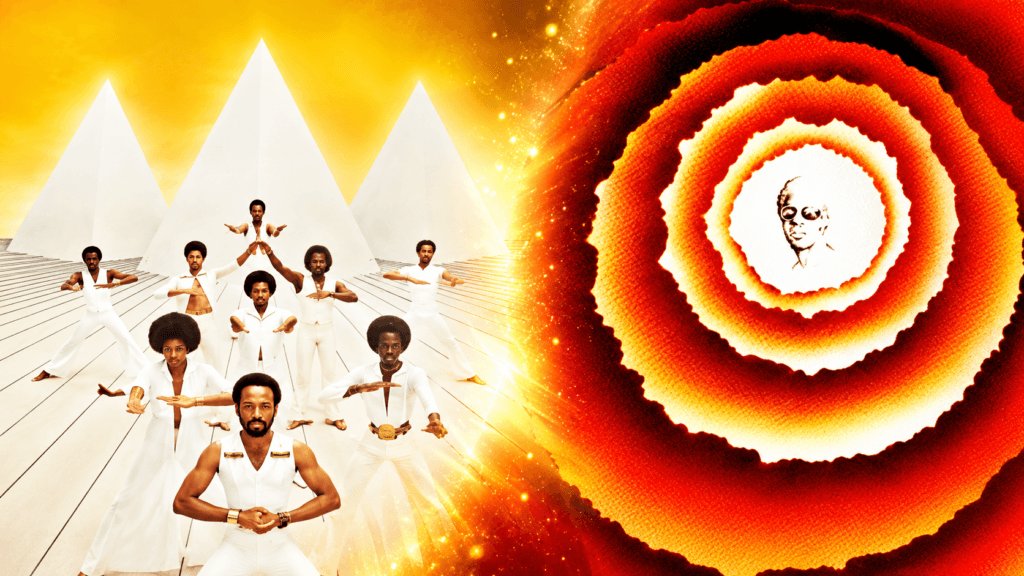
Greg dates that moment to April 2, 1975, when he was just 18. He soon became part of the musical world surrounding Songs in the Key of Life .
Greg Phillinganes performing live at Blue Note Los Angeles. Photograph: Dwann Brown.
The evening opened with “Contusion,” the instrumental from Stevie Wonder’s Songs in the Key of Life . Greg told a wonderful story about a passage developed in the studio that Stevie wanted to play but couldn’t quite execute to his satisfaction. Greg stepped in to play it. That anecdote captures the creative trust within Stevie’s circle: even a singular genius relied on gifted collaborators to help realize his musical ideas.
Watch my live concert footage: Greg Phillinganes performs “Contusion” by Stevie Wonder
Greg Phillinganes performing “Contusion” and recalling the Stevie Wonder recording session — Blue Note Los Angeles. Video: Dwann Brown.
Greg’s work with Michael Jackson reached across landmark albums including Off the Wall , Thriller , Bad , and Dangerous . His keyboard playing, synthesizer work, and arrangements were part of the sophisticated musical environment Quincy Jones assembled around Michael. Greg also served as musical director on Michael Jackson’s Bad World Tour and worked on the Dangerous tour.
That matters. Turning elaborate studio productions into commanding live performances demands more than chops. It takes someone who understands the music structurally and can lead other first-rate players. Greg was trusted with that responsibility.
[OPTIONAL ARCHIVAL IMAGE: Greg on Michael Jackson’s Bad tour; use only with appropriate image rights.]
This part of Greg’s career has a personal connection for me. My father-in-law James Anthony Carmichael helped shape the sound of the Commodores and Lionel Richie’s solo career. He held Greg in exceptionally high regard, and studying those records helps explain why.
Greg didn’t merely play keyboards for Lionel. His songwriting credits with Richie include “Serves You Right” (Lionel Richie , 1982), “Love Will Find a Way” (Can’t Slow Down , 1983), “Se La,” and “Love Will Conquer All” (both on Dancing on the Ceiling , 1986). Those credits demonstrate a command of melody, harmony, and songwriting in addition to performance. Carmichael’s production and arranging work intersects with this musical world, although the individual credits should always be distinguished.
Greg also recalled Lionel choosing him as musical director for his first solo tour, with the Pointer Sisters opening. Think about the arc: Stevie Wonder, Michael Jackson, and Lionel Richie—three of the biggest Black American male stars of the 1980s—each relied on Greg’s musical abilities. Three different sounds, three distinct personalities, and a common trusted collaborator.
James Anthony Carmichael and Lionel Richie.
Greg described Quincy Jones as much more than a producer: a mentor, father figure, and close friend. He spoke about Quincy’s humility and a lesson worth remembering: truly great people don’t have to announce their greatness; their work speaks for itself.
One of the night’s best stories concerned James Ingram’s “One Hundred Ways.” Greg said he had fallen asleep beneath a piano during a late-night studio session when someone woke him because Quincy needed a solo. He sat down, still half-asleep, and improvised. Quincy later told him it was his favorite Greg solo because he had been in what Quincy called the “alpha state”—relaxed, not overthinking, letting musical instinct take over.
That is the difference between merely knowing how to play and possessing deep musical intuition. Theory and technique matter, but a musician of Greg’s caliber can turn them into something spontaneous and moving.
His credits reach well beyond Stevie, Michael, and Lionel: Donald Fagen, George Benson, Patti Austin, the Pointer Sisters, Diana Ross, Paul Simon, Herbie Hancock, Eric Clapton, and many others. During the concert, Greg discussed Steely Dan, Donald Fagen, and the late Walter Becker. His work on Fagen’s The Nightfly reflects a different musical language from Stevie’s funk or Michael’s pop—meticulous, jazz-influenced, and harmonically demanding.
Greg can operate in all these settings without sounding out of place. That is not simply versatility for its own sake. It’s understanding what makes each style work.
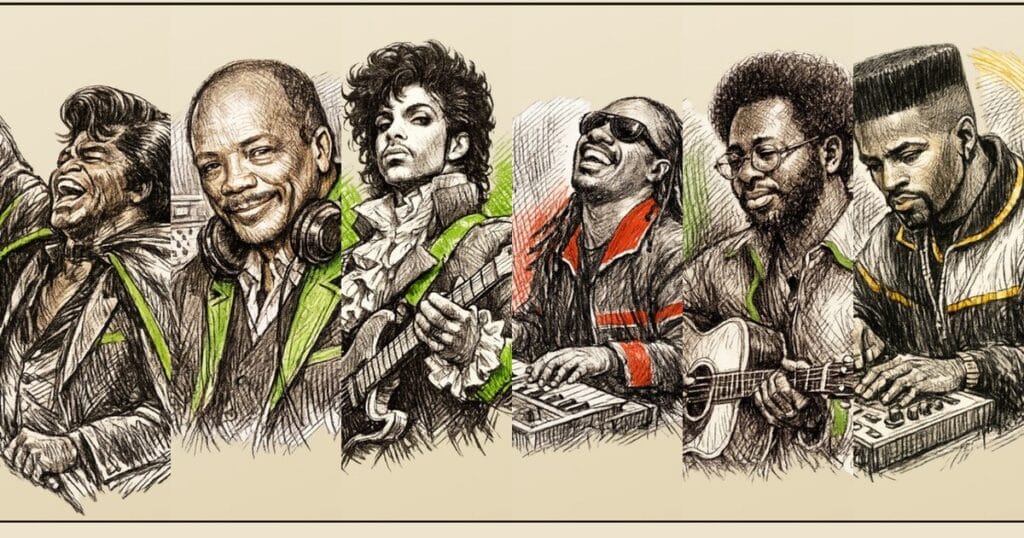
Through Incense-N-Ashtrays and the Black American Music Family Tree, I’ve spent years stressing the importance of documenting the people who actually created the music . We know the singers and album covers, but who played the keyboard introduction? Who developed the synthesizer textures? Who made the arrangement breathe?
Greg Phillinganes belongs in the broader conversation about the session musicians whose contributions shaped the music industry. His career also charts a crucial period in Black American music, when synthesizers, electronic keyboards, and new recording techniques became central to sophisticated R&B production.
Greg began working with Stevie Wonder in 1975. More than fifty years later, he can sit at a keyboard and explain how recordings that became part of our collective memory were made. He remembers the auditions, the sessions, the jokes, the musicians, and the moments that changed his life. Most importantly, he can still play the music.
Watching him reminded me of something James Anthony Carmichael understood: great music requires great musicians. Greg Phillinganes has spent his career being one of those musicians. His fingerprints are all over some of the most important records in modern music history. The public may not always know his name, but they’ve been listening to his work for decades.
Greg Phillinganes didn’t just play on the soundtrack of our lives. He helped create it.
FROM MY NOTEBOOK
I wrote a more personal piece about this night — what Greg Phillinganes reminded me about the musicians we rarely name, and why it stayed with me on the drive home. It lives on my Substack, where I put the thoughts that do not fit the article.
Read it, and subscribe to follow along →
IncenseNashtrays is an independent music publication founded by Dwann Brown. He is also President of the Black American Music Family Tree Historical Foundation , a separate 501(c)(3) nonprofit documenting the origins, evolution, and global impact of Black American music through documentaries, interviews, and education programs.
If this article expanded your understanding of music history, consider supporting the Foundation directly. Donations go to the Foundation and are tax-deductible.
Support the Foundation Go deeper on Substack