


You’ve heard him a thousand times and never knew his name.
You may have heard Josef Leimberg long before you knew his name.
As a trumpet player, producer, engineer, and composer, Leimberg has left his fingerprints on music by Erykah Badu, Kendrick Lamar, SZA, Snoop Dogg, Kamasi Washington, and others. But focusing only on those credits misses a large part of the story. Alongside his work with some of the most recognizable artists of the past two decades, Leimberg has quietly built a musical world of his own.
In this Incense-N-Ashtrays conversation, Leimberg sits down in his studio and traces the connections between jazz, hip-hop, R&B, funk, Brazilian music, and spiritual composition. Listening to him tell the story, one thing becomes clear: his career was never about finding a lane and staying in it.
It was built through musicianship, relationships, curiosity, and a willingness to follow wherever the music wanted to go.

Erykah Badu Is More Hands-On Than People Might Think
Leimberg begins the conversation by talking about his contribution to Erykah Badu’s new music, offering a revealing glimpse into how Badu works behind the scenes.
Before Leimberg came in, Badu had already written a specific horn line on a Moog synthesizer. His job was to take what she had created and translate it through trumpet and valve trombone.
“She’s very, very hands-on with the production,” Leimberg says.
It is a small detail that says a lot.
Badu is often celebrated as a vocalist, songwriter, and visionary, but Leimberg’s account emphasizes how involved she is in actually constructing the music. She is not simply arriving to sing over something someone else has made. She is helping shape the record from inside the production itself.
Leimberg also talks about the importance of the musical community surrounding her, including RC and the Gritz, and the larger network connecting Badu with artists such as Snoop Dogg, Kamasi Washington, Terrace Martin, and other West Coast innovators.
Those connections matter because they reveal something bigger than a collection of individual credits. They show a musical community in constant conversation with itself.
Snoop Dogg Gave Musicians a Place to Grow
Long before many listeners associated Josef Leimberg with the jazz-inflected world surrounding To Pimp a Butterfly, he was gaining major touring experience through the Snoopadelics.
That band included Kamasi Washington, Ryan Porter, Terrace Martin, Isaac Smith, and RC Williams—a lineup that, in retrospect, reads like an early map of musicians who would help reshape the sound of West Coast music.
Leimberg credits Snoop Dogg with creating opportunities for musicians to work, develop, and gain experience at a professional level.
“He gives everybody a shot,” Leimberg says. “Whether you play an instrument or you sing or you doing background vocals… everybody gets a shot.”
It is an aspect of Snoop’s legacy that can disappear behind the celebrity.
The records are one thing. The larger ecosystem around them is another. By bringing instrumentalists, vocalists, arrangers, and younger musicians into that world, Snoop helped give people a chance to learn what professional music actually looks like—from touring and rehearsals to recording sessions and life on the road.
Leimberg was part of that ecosystem.
He also reflects on his work on Snoop’s Paid tha Cost to Be da Boss and R&G (Rhythm & Gangsta): The Masterpiece, including “Pimp Slapp’d” and “Can I Get a Flicc Witchu,” the latter featuring Bootsy Collins.
Inside Josef Leimberg’s Work on Kendrick Lamar’s To Pimp a Butterfly
Some of the most revealing moments in the conversation arrive when Leimberg discusses Kendrick Lamar’s To Pimp a Butterfly.
Leimberg produced “How Much a Dollar Cost” and “You Ain’t Gotta Lie (Momma Said),” two songs from an album that would become a defining statement in contemporary hip-hop.
But the story behind those credits is complicated.
Leimberg explains that his official producer credit did not initially appear under his own name. The work had originally been placed through an anonymous production team arrangement, and his name was not formally listed until years later.
The credit story is interesting, but his description of how the music was actually built may be even more revealing.
Talking through “How Much a Dollar Cost,” Leimberg describes a production process that moved far beyond the conventional idea of simply making a beat. His ASR-10 drum programming and sampled textures were combined with live musicians, including Matt Little on keys and Gabe Noel on upright bass. Leimberg then layered saxophone, trumpet, and muted trumpet, adding more depth and weight to the arrangement.
“It’s a team game,” he says of the production process.
That phrase gets to the center of how this music works.
Great Black American music has rarely been about one isolated element. Composition, arrangement, musicianship, engineering, production, improvisation, and performance overlap. One person introduces an idea. Another hears somewhere it can go. Someone else changes the harmony, adds a horn, shifts the rhythm, or gives the record a texture it did not have before.
A “beat” can be the foundation. It does not have to be the finished building.
Even more remarkably, Leimberg says “How Much a Dollar Cost” nearly did not end up on the album.
Terrace Martin reportedly first suggested that Leimberg save the track for someone like Jay-Z. Leimberg heard something different. He believed Kendrick would connect with it.
He was right.
SZA’s Ctrl and the Freedom to Experiment
Leimberg’s studio also became part of another landmark album.
He produced “Pretty Little Birds” from SZA’s Ctrl, and his memories of that period offer a glimpse into the less glamorous—and often more interesting—reality of making records.
SZA spent months working in his studio, according to Leimberg. There was experimentation, recording, rethinking, and the constant movement that comes with following an idea before anyone knows exactly where it will end up.
That kind of environment appears repeatedly throughout Leimberg’s story. The studio is not simply a place where finished ideas are documented. It is a laboratory.
Songs can change. Musicians can respond to one another. An idea that seems insignificant one day can become the center of a record later.
Watching Kamasi Washington and The Epic Take Shape
Leimberg also had a close view of Kamasi Washington’s rise and the creation of The Epic.
He remembers hearing the project before the wider world caught up to what Washington was building: a massive body of work driven by orchestration, choirs, long-form composition, and an ambition that refused to shrink jazz into something more easily marketable.
“You can’t buy a cult following,” Leimberg says. “That’s something that just happens at the grassroots level.”
It is an especially fitting description of what happened around the West Coast jazz movement.
The music did not break through because the musicians made it smaller, simpler, or easier to categorize. If anything, they went in the opposite direction.
They made it bigger.
Jazz could sit beside hip-hop. Funk could collide with orchestral writing. Spiritual jazz could share space with contemporary production. Musicians who had spent years playing together could bring that history into records reaching audiences far beyond the traditional jazz world.
The audience came to the music rather than the music being reduced for the audience.
Astral Progressions: Josef Leimberg Steps Into His Own World
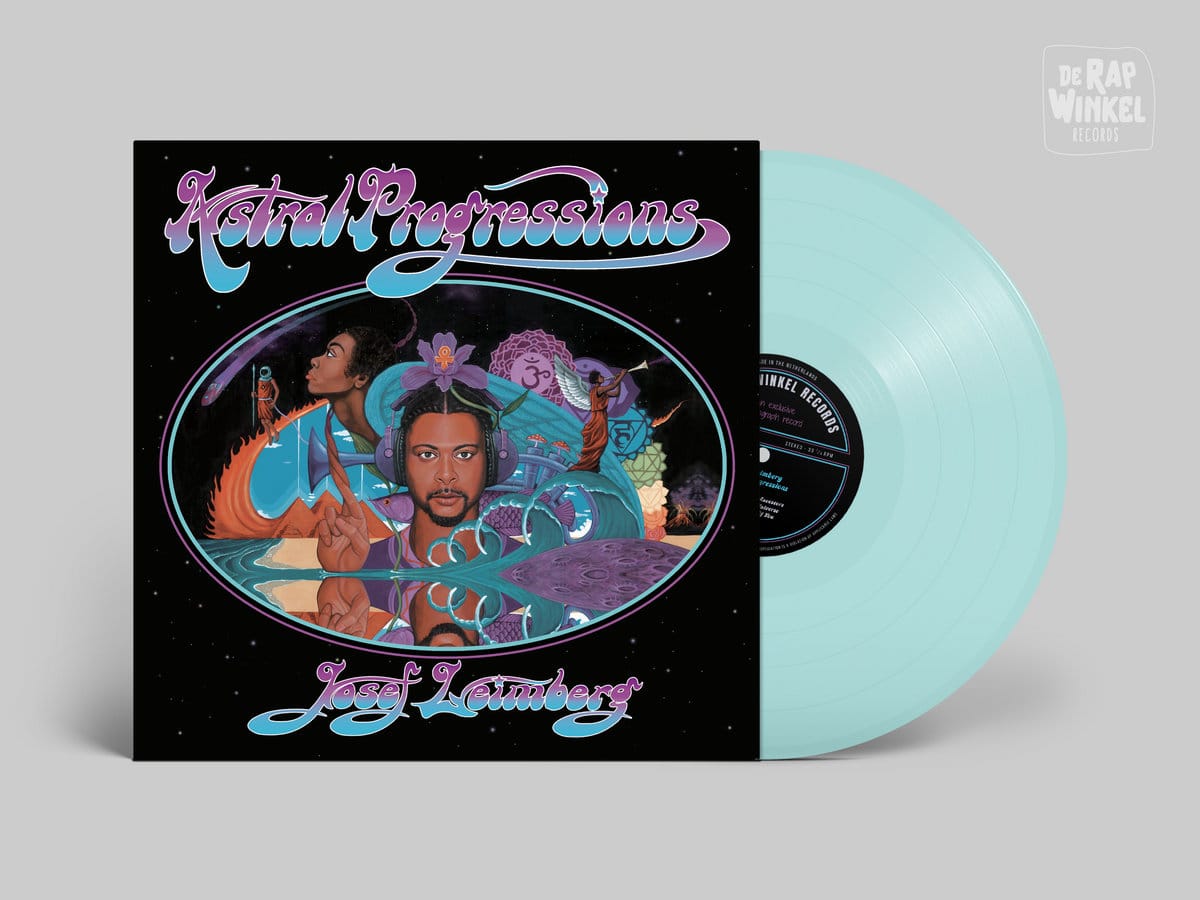
To understand Leimberg only through his work with Kendrick Lamar, SZA, Snoop Dogg, Erykah Badu, or Kamasi Washington would be to understand only part of him.
His own albums reveal where many of these musical ideas meet.
Leimberg describes Astral Progressions as a project that took shape before, during, and after the To Pimp a Butterfly period. The album was also inspired in part by encouragement from his late mother, who pushed him to make music of his own.
That decision gave Leimberg room to move beyond the role of sideman or producer-for-hire and put his broader musical identity at the center.
His later project, Mystic Journey, pushed deeper into live instrumentation, harmony, melody, and composition.

“Mystic Journey is just an extension of what I was doing with Astral Progressions and To Pimp a Butterfly,” he says. “It’s all really connected.”
That last sentence may be the best way to understand Leimberg’s career.
It is all connected.
From Miles Davis to Brazilian Music
On paper, Josef Leimberg’s musical interests can look unusually broad. Hip-hop production sits beside jazz composition. Miles Davis charts coexist with Brazilian rhythms. Funk, fusion, spiritual jazz, and R&B move in and out of the same musical universe.
But hearing Leimberg explain it, those worlds do not sound disconnected at all.
They are different expressions of the same musical language.
That approach continues with his forthcoming album, Multiversal, which incorporates Brazilian influence, fusion, spiritual concepts, and nods to artists including Weather Report, Jaco Pastorius, Joe Zawinul, Alice Coltrane, and Mahavishnu Orchestra.
For Leimberg, moving between these traditions is not about genre-hopping for its own sake. It comes from hearing the relationships between them—the rhythm, harmony, improvisation, spirituality, and musicianship running underneath the labels.
Keeping the Human Spirit in the Music
Near the end of the conversation, Leimberg turns toward the future.
At a time when shortcuts, automation, and music designed for rapid consumption increasingly shape conversations around creativity, his message is strikingly simple.
“Let’s push [music] forward—not with AI, but with the spirit that’s inside of you,” he says. “The God energy, not the computer.”
The point is not necessarily that technology has no place in music. Leimberg’s own career spans production, engineering, sampling, synthesizers, drum programming, and live instrumentation.
The distinction is about where the music begins.
Technology can be a tool. It cannot substitute for imagination, discipline, musical relationships, lived experience, or the ability of one musician to respond to another in real time.
The horn still matters.
The drummer still matters.
The arranger still matters.
So does the producer who understands that a record can be more than a beat, and the musician who can hear connections between genres that other people have been taught to keep separate.
Josef Leimberg’s career is a reminder that some of the most important people in music are not always the ones standing at the center of the photograph.
Sometimes they are in the studio, adding the horn line that changes the record.
Sometimes they are programming drums, arranging musicians, engineering a session, or connecting people who will go on to create something larger than any one of them.
And sometimes, after years of helping shape everybody else’s musical world, they finally invite listeners into their own.
Josef Leimberg is one of those musicians.
Watch the full Incense-N-Ashtrays interview for the complete conversation on Erykah Badu, Kendrick Lamar, SZA, Snoop Dogg, Kamasi Washington, Nate Dogg, Miles Davis, To Pimp a Butterfly, the West Coast jazz renaissance, and the future of live music.