
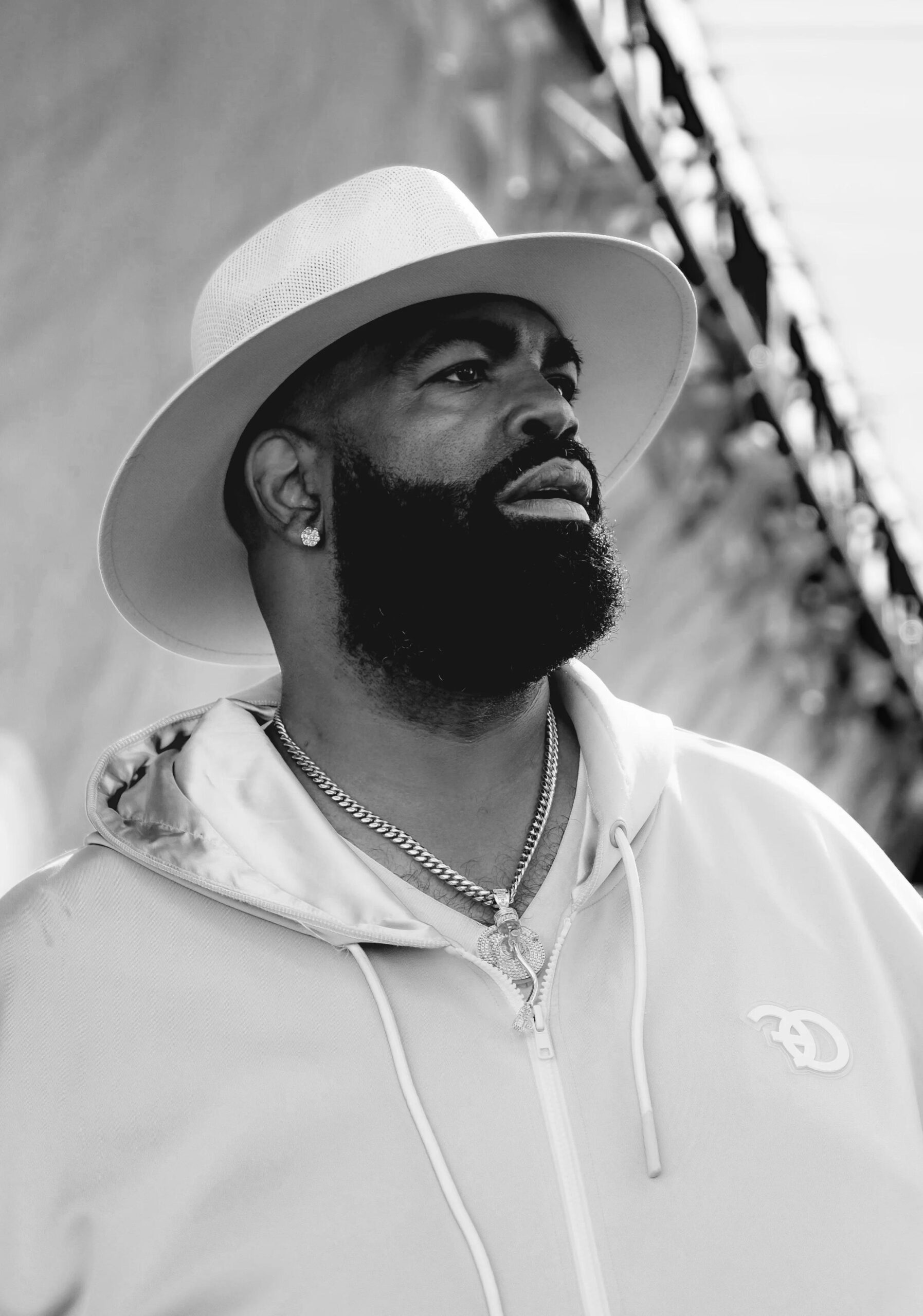
A Deep Conversation on the Man, The Music,The Mind, and Sound Behind West Coast Hip Hop
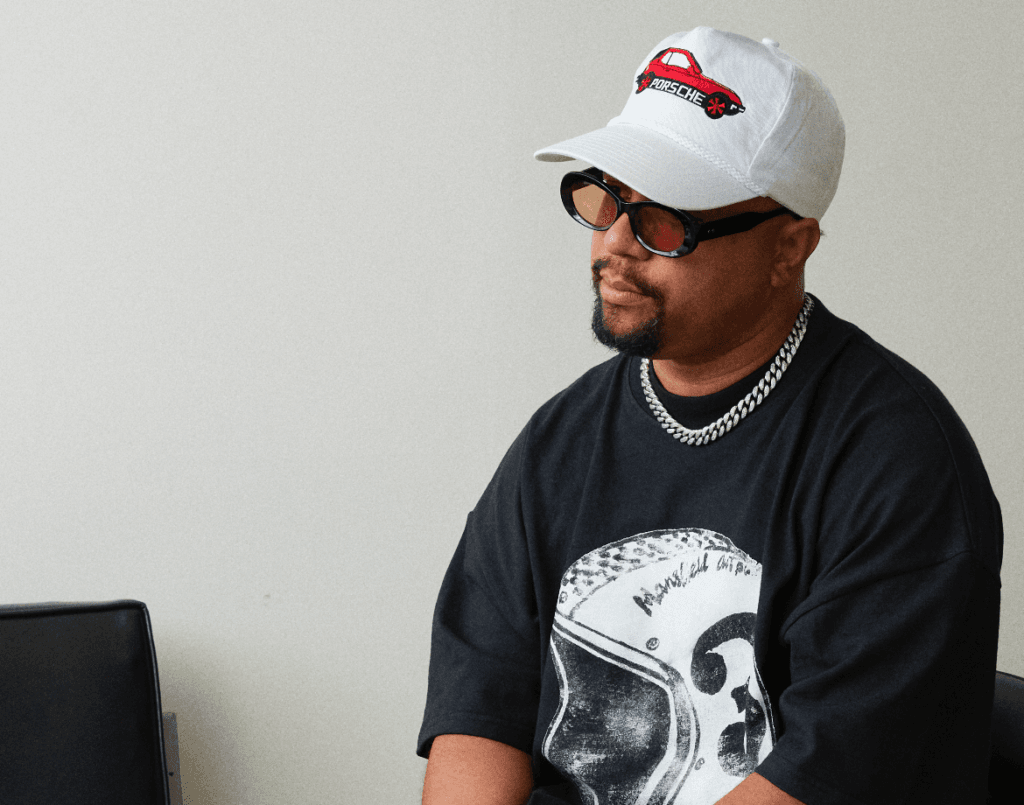
Sitting down with DJ Battlecat didn’t feel like interviewing a DJ. It felt like talking to a musician who just happened to express himself through turntables, drum machines, and records. And I want to be clear about that from the beginning—he’s more than a DJ. He’s a sound designer. He’s somebody who understands music on a level that goes beyond putting drums on a grid. He understands texture, tone, space, air. He understands what makes something breathe.
And as a drummer sitting across from him, I could hear it in everything he was saying.
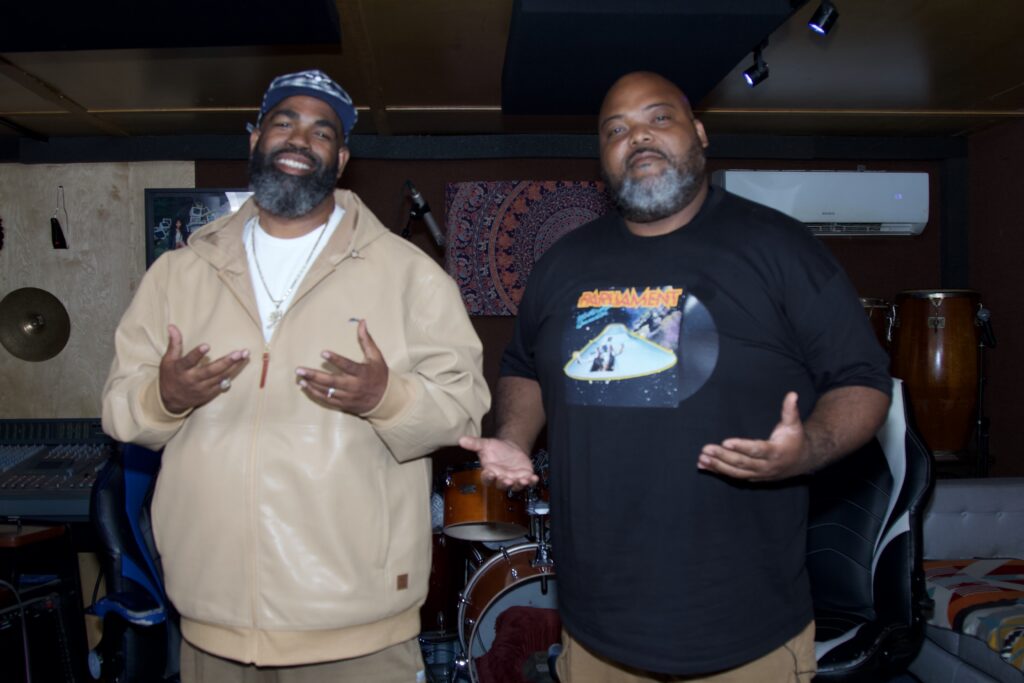
Because when you really listen to Battlecat’s records, they don’t feel programmed. They feel played. There’s chemistry in them the same way there’s chemistry in a live band. The snares aren’t stiff—they have air around them. The percussion isn’t just there for decoration—it’s part of the conversation. He knows where a cymbal belongs. He knows how groove sits in the pocket. That’s not something you get from just learning software. That comes from being a drummer first.
And that’s where his story starts.
Not in a studio. Not behind a board. But in the house. A paper drum set that didn’t last long. Pots and pans. Hands hitting surfaces because something inside him needed to come out. Every drummer knows that phase—before you know what you’re doing, before anybody teaches you anything, you just feel it. You hit things because it makes sense to your body.
What stood out to me is how that instinct was shaped. His father gave him the ear—the ability to hear something and bring it back without reading music. That’s a real gift. But his mother gave him structure in a way that most people wouldn’t even recognize as musical training. She had him stacking records, organizing 45s, albums, 8-tracks, building sequences. She had a mic plugged in so he could call out the next record like an MC before he even knew what MCing was. That’s DJ training before turntables ever show up.
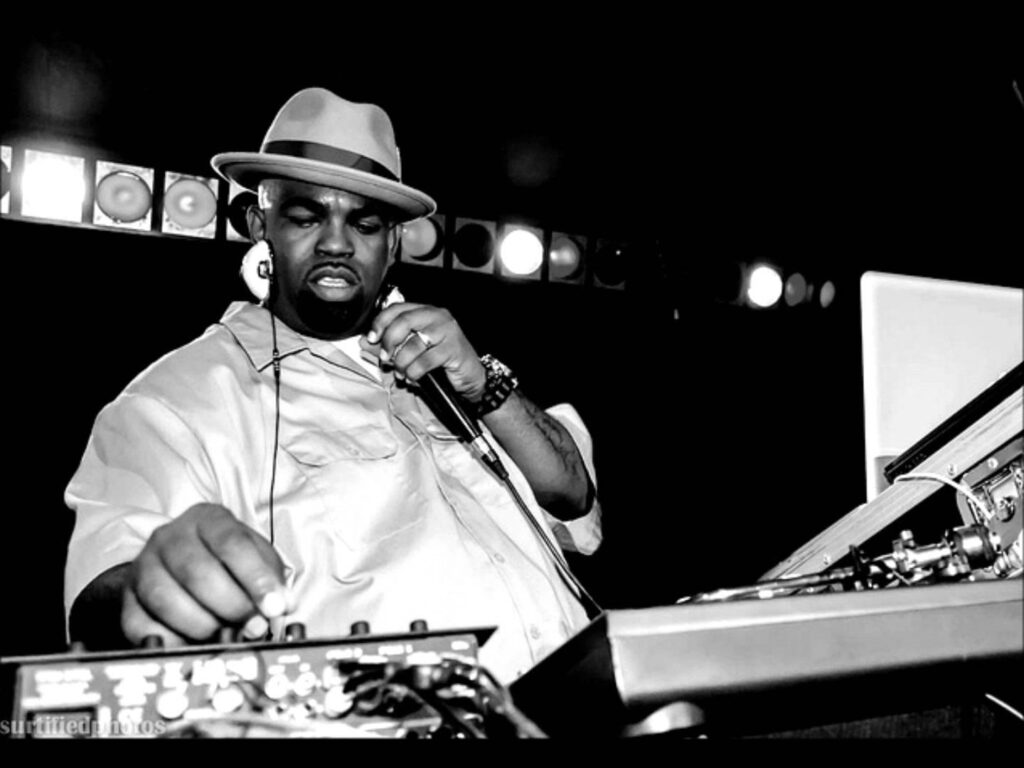
So when he finally sees a real setup—two turntables, a mixer—it’s not new to him. It’s just the full version of something he’s already been doing.
That’s important, because one thing I wanted to make clear in this conversation is that West Coast hip-hop has its own ecosystem. It didn’t grow out of one single source the way people try to frame it. Battlecat didn’t learn from a textbook version of hip-hop. He learned from his family. From his environment. From what was around him. From stacking records in the house, from feeling rhythm in his hands, and later from being shown how to program drums by Dr. Dre.
That’s a completely self-contained system.
And when you look at his career, it reflects that. He’s not just a producer who made hits—he’s one of the DJs from KDAY, the first full hip-hop radio station in America. A KDAY Mixmaster. That matters. That puts him right at the center of how the West Coast sound was being shaped and distributed in real time.
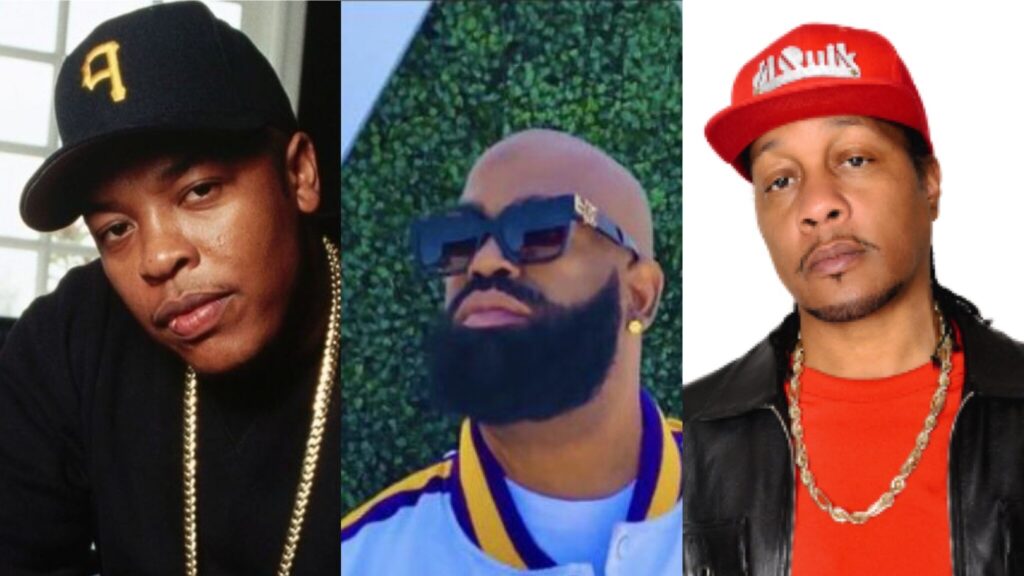
So when I talk about him being part of the holy trinity of the West Coast alongside Dr. Dre and DJ Quik, I’m not saying that lightly. That’s not hype. That’s placement. Three different approaches, three different sounds, but all foundational.
And what separates Battlecat in that conversation is the feel.
Even in records that come from a harder place, there’s always something lifting the music. There’s a bounce, a light, something that feels like it’s pulling you up instead of weighing you down. That’s where the gospel comes in. That’s where the church comes in. That’s where the soul lineage connects him back to artists like Marvin Gaye and Donny Hathaway. That tradition of taking something heavy and turning it into something you can move with.
He broke that down in a way I think people don’t always catch. Even when we talked about “We Can Freak It,” he wasn’t talking about it in the way people usually interpret it. He’s talking about transformation. Taking a situation that’s off, strange, uncomfortable—and flipping it into something functional. Something you can live with. That’s a deeper musical philosophy, and you can hear it in the way his records are built.
When the conversation moved into the 90s, it got even more layered. Because now we’re talking about Los Angeles, and that’s always going to come with a certain narrative attached to it. But what he described was something much more nuanced. He talked about understanding the streets while walking on the sidewalk. That’s a real distinction. It means you’re close enough to see everything, to understand the codes, but you’re not fully pulled into it.
And more importantly, there were people around him who made sure he stayed on his path. That’s a part of the story that doesn’t get told enough. The same environments people label as chaotic also had structure, guidance, and protection. People who saw what he was and made sure he didn’t get lost in what was happening around him.
That’s how he was able to move the way he did. Through different spaces, different artists, different affiliations, without being boxed into any one lane.
And that’s why his music feels the way it does. It doesn’t sound like it belongs to one corner—it sounds like it understands all of them.
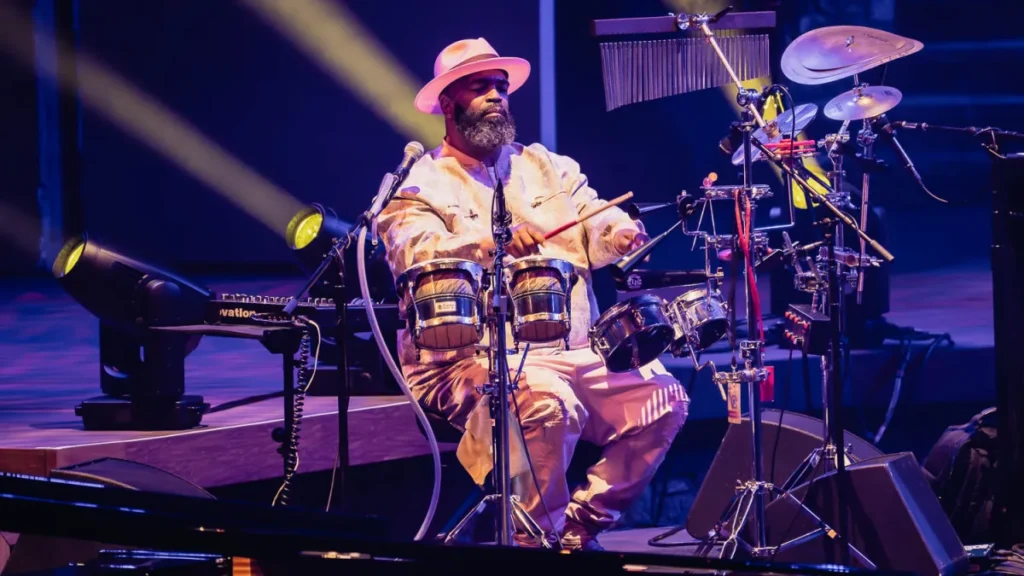
As we got further into the conversation, it naturally moved beyond hip-hop, because for him there isn’t a separation. When you see him on stage with Kamasi Washington, in the middle of a full orchestra, a choir, multiple drummers, a complete wall of sound, and he finds a way to sit inside that—not dominate it, not get lost in it, but contribute to it—you realize you’re not just looking at a hip-hop producer.
You’re looking at a musician.
And not just a musician in name, but in practice. Someone who listens. Someone who understands when to complement and when to step forward. When it’s time to take a solo and when it’s time to support the moment. His musicianship holds up in those spaces with some of the best jazz players in the world because he comes from the same root.
That’s really the bigger point of all of this.
Hip-hop didn’t come out of nowhere. It’s a continuation. A child of the blues and jazz. And when you see someone like Battlecat—who started in hip-hop, but was baptized in funk, shaped by soul, grounded in rhythm—step into that jazz space with Kamasi, what you’re really seeing is the music coming full circle.
He’s a through line.
From the early days of West Coast hip-hop, through the G-funk era, through everything that came after, all the way to now.
And when we closed the conversation, and I asked him about different artists, the way he responded told you everything about how he sees the world. George Clinton was freedom. Snoop Dogg was a pioneer. Kendrick Lamar was a voice. Dr. Dre was leadership. Quincy Jones was possibility. He wasn’t just naming people. He was naming qualities. Things he carries in his own work.And that’s what you walk away with after talking to him.
Not just the accomplishments. Not just the records. But an understanding of who he is as a person. Someone still grounded in the same feeling that made him hit those pots and pans in the first place. Someone still listening. Still building. Still trying to be better.
And for me, as a musician, that’s what mattered most.
DJ Battlecat isn’t just part of the West Coast sound—he’s part of the foundation that connects it all.
From rhythm to programming, from gospel to G-funk, from hip-hop to jazz, he represents the continuity of Black American music as one living system.
Different tools. Same source. And if you really listen closely—you can still hear the drummer.
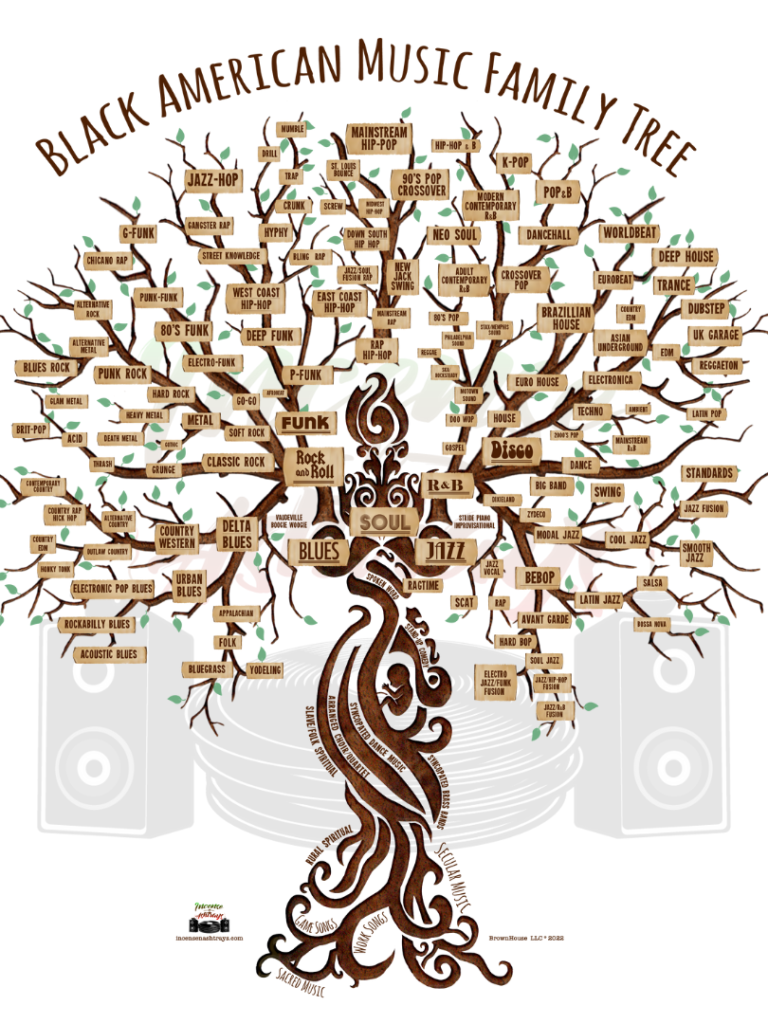
We Support the Black American Music Family Tree Historical Foundation
Preserving, documenting, and teaching the history of Black American music as one continuous cultural tradition.
Learn more and support the mission:
bamfamilytree.org