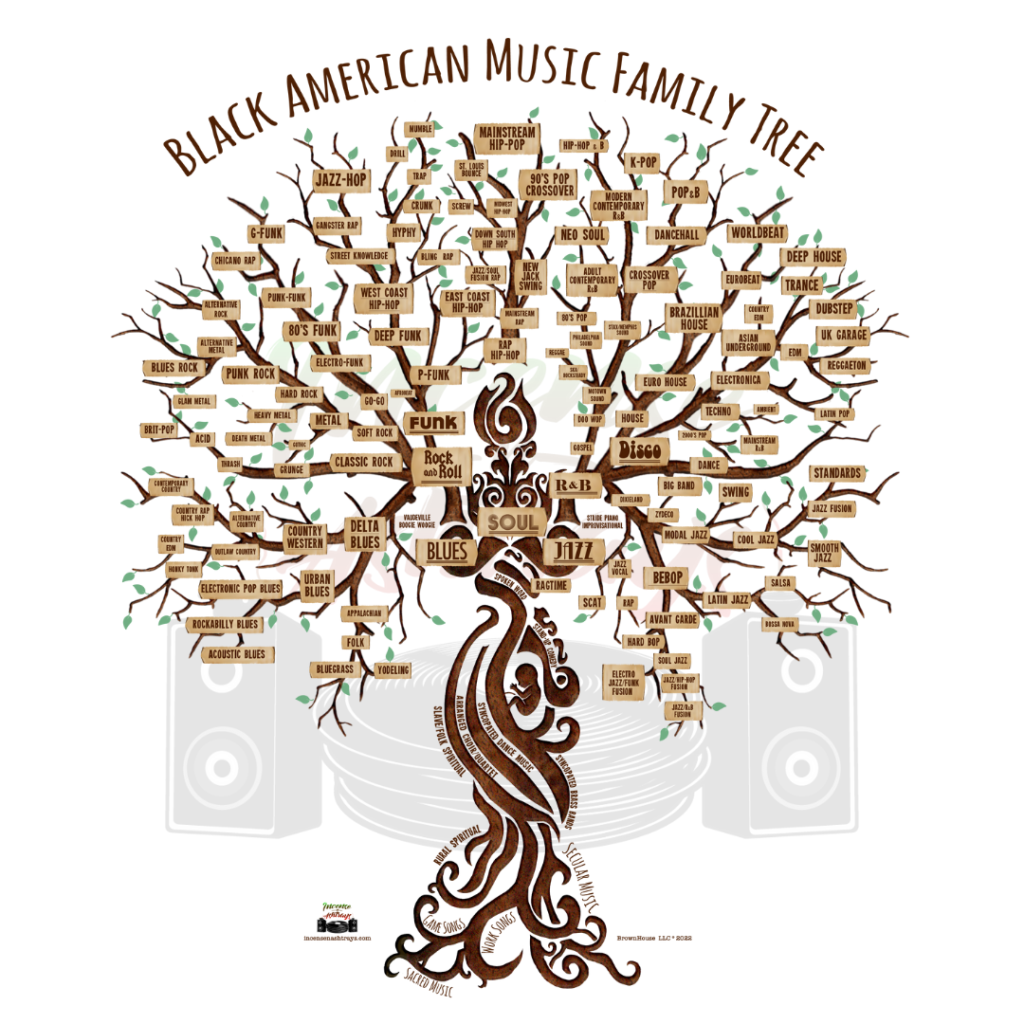

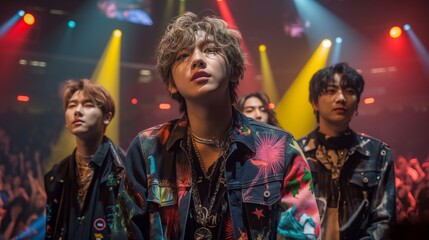
I pulled the original records and matched them with K-pop hits—same groove, same structure, same blueprint. Listen for yourself.
Don’t Take My Word for It
There’s been a long-running conversation about K-pop being “influenced” by Black American music.
I’m not here to debate that in theory.
I pulled the actual songs. Side by side.
If you click the video links and listen for yourself, you’ll hear exactly what I’m talking about. This isn’t vague influence. This is structure, phrasing, groove, and format being carried over almost directly.
Let’s walk through it.
Case Study 1: JJ Fad to BABYMONSTER
Start here.
Click Supersonic, then go straight to BABYMONSTER’s Hot Sauce.
Don’t overthink it—just listen.
What you’ll hear:
- Chant-style group delivery
- Call-and-response cadence
- Minimal drum-driven beat
- Same “we’re introducing ourselves” energy
This is a direct lift of the late 80s Black American electro-rap girl group format.
Same structure. New packaging.
Case Study 2: Mary J. Blige to Lee Hyori
Now click Family Affair and play the first 20 seconds.
Pause it.
Then play 10 Minutes.
Listen to the pocket.
You’ll notice:
- Same tempo bounce
- Same drum feel
- Same laid-back vocal tone
- Same minimalist club groove
That early 2000s R&B sound—driven by producers like The Neptunes—is being replicated almost exactly.
Case Study 3: Travis Scott and the Real-Time Copy Cycle
This one is important.
Click FE!N and go straight to the hook.
Then play a modern Korean trap artist Cortis song Fashion
What you’re listening for:
- Distorted “rage” beat
- Loop-based chant hook
- Vocals acting as rhythm
- Same energy pacing
This isn’t influence over time.
This is real-time duplication of Black American sound as it’s happening.
Case Study 4: Watch the Visual Language Too
Now pay attention to more than just the beat.
Before you even get to the sound, click the video for Good Boy by G-Dragon and Taeyang.
Look at the culture being presented:
- The barbershop setting
- The styling
- The braids
- The movement and attitude
That’s not accidental. That’s a direct pull from Black American visual and cultural spaces.
Now listen to the drums.
That groove—the bounce, the pocket, the way the rhythm sits—is completely rooted in Black American hip hop production. It’s the same minimal, percussion-driven feel that defined records like Drop It Like It’s Hot.
So what you’re seeing and hearing at the same time is important.
It’s not just the music being carried over.
It’s the full package:
- Sound
- Style
- Movement
- Environment
All of it working together inside a familiar framework.
This Isn’t New—But It’s Bigger Now
Let me be clear about where I stand on this.
Black American music has always been sampled, borrowed, and in many cases, flat-out taken. That’s not new.
We’ve seen artists come to America, study the sound, reproduce it, and build entire careers off of it—sometimes reaching levels of global success that the originators never received.
That’s been happening.
But what’s different now is the scale and the system.
Japan and Korea have been doing this since the 1970s. If you go back and listen to early J-pop, you’ll hear direct lifts from soul, funk, and R&B records. But what we’re seeing with today’s K-pop phenomenon is far more organized, far more precise, and far more global.
This doesn’t feel random.
It feels like a pipeline.
And here’s where it gets interesting.
There is strong evidence that K-pop companies regularly purchase and license songs from Western writers and publishers through songwriting camps, demo catalogs, and publishing deals. Major Korean companies like SM Entertainment, YG, and HYBE work directly with international producers and songwriters who create tracks specifically for K-pop acts.
So no—this is not likely “theft” in the legal sense across the board. The business side is structured.
But that raises a different question:
Who is actually getting paid—and who is getting credit?
Because they’re not just taking the music.
They’re taking:
- The sound
- The vocal style
- The dance language
- The fashion
- The attitude—the entire performance identity
That all comes from a Black American cultural lineage.
And to be clear—I don’t have an issue with people recreating great art. When something is powerful, people are going to study it and build their own version of it.
That’s how culture moves.
But I am here to make sure the root is acknowledged.
Because historically, Black Americans have created the foundation and watched others scale it globally without proper credit attached to the origin.
So the real question isn’t just about copying.
It’s this:
Are the creators—the people who built the sound—being properly credited and compensated as this music circulates worldwide?
That’s the part worth paying attention to.
The Sound Came From Somewhere—So Where Did It Go?
Let me be clear.
It’s not a problem that people study what we created and build their own version of it. That’s what happens when something is powerful. When the music is undeniable, it’s going to travel.
And it’s interesting to watch what K-pop has done with it.
But here’s the part that doesn’t sit right with me.
All of this—every groove, every harmony, every group format—descends from traditions we built. Gospel quartets. Doo wop. Music developed in Black American churches and on street corners. That’s where the blueprint came from.
And if you grew up in the 90s or before, you know what that looked like.
We were flooded with vocal groups:
- The Temptations
- The Dramatics
- New Edition
- Jodeci
- Dru Hill
Groups that could sing. Groups that could move. Groups that carried the full tradition forward.
But somewhere around the turn of the century, that pipeline disappeared.
American music—especially at the major label level—stopped funding vocal groups. Stopped investing in that sound. Stopped developing that format.
And now you have a generation of kids—especially Black American kids—who hear K-pop and connect to it, because something about it feels familiar.
That’s not random.
That’s recognition.
It’s the echo of something they were supposed to inherit.
But they don’t get to see themselves in it.
That’s the gap.
So the question isn’t whether K-pop is good or not.
The question is:
Can we allow K-pop to thrive—and at the same time bring back the vocal group tradition here in America?
Because the reality is, this kind of music doesn’t just happen.
It takes:
- training
- development
- choreography
- production
- and most importantly—funding
And right now, it feels like everybody is getting funded to do Black American music… except Black American talent at scale.
I don’t have the answer.
But I do know this:
It would be a powerful thing to see us fully step back into our own sound again—and be supported doing it.
Support the Work
IncenseNashtrays supports the preservation and documentation of American music history through the Black American Music Family Tree Historical Foundation.
Support the movement here:
https://bamfamilytree.org