

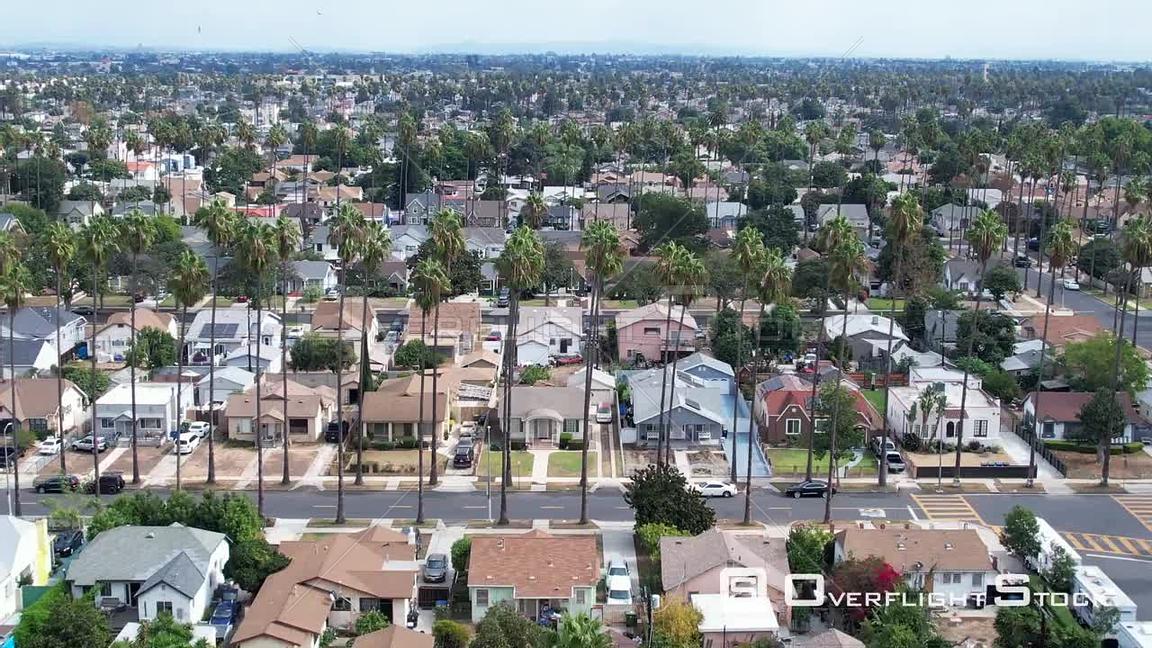
For decades, South Central Los Angeles has been flattened into a single story—one built around gang culture, violence, and dysfunction. It’s a narrative that has traveled far beyond the city itself, shaping how Black Los Angeles is understood nationally and even globally. It is repeated so often, and with such certainty, that it has come to feel like fact. But like most convenient narratives, it holds just enough truth to avoid scrutiny while obscuring a far more complex—and far more consequential—reality.
It began with builders.
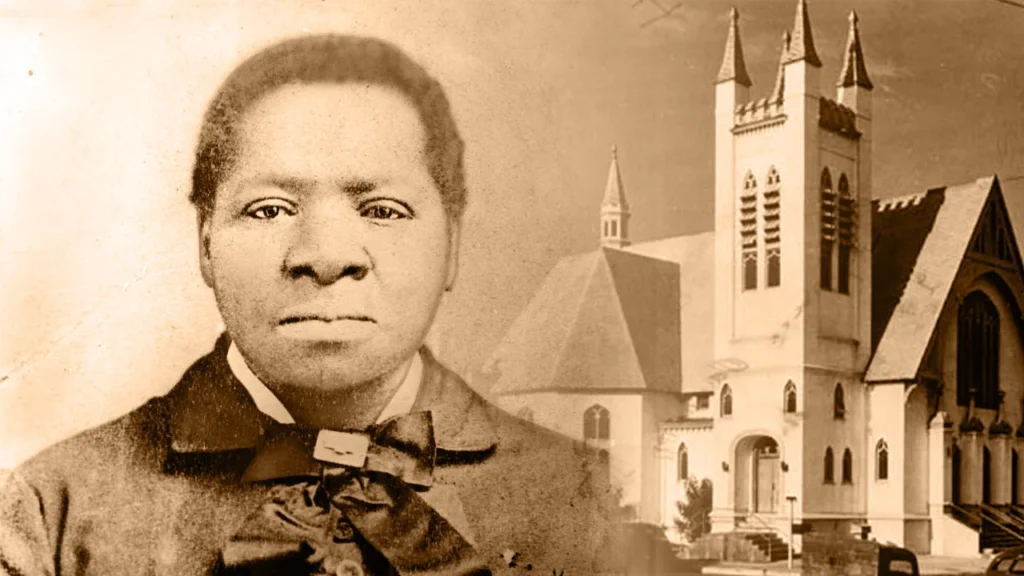
From the earliest days of the city, Black Angelenos were part of its foundation. Figures like Biddy Mason helped establish Los Angeles as a place where Black people could own land, build wealth, and create community in a society that often denied them all three. By the early 20th century, that foundation had expanded into something far more powerful: a thriving, self-sustaining ecosystem of business, culture, and civic life that stood as one of the most vibrant Black communities in the United States.
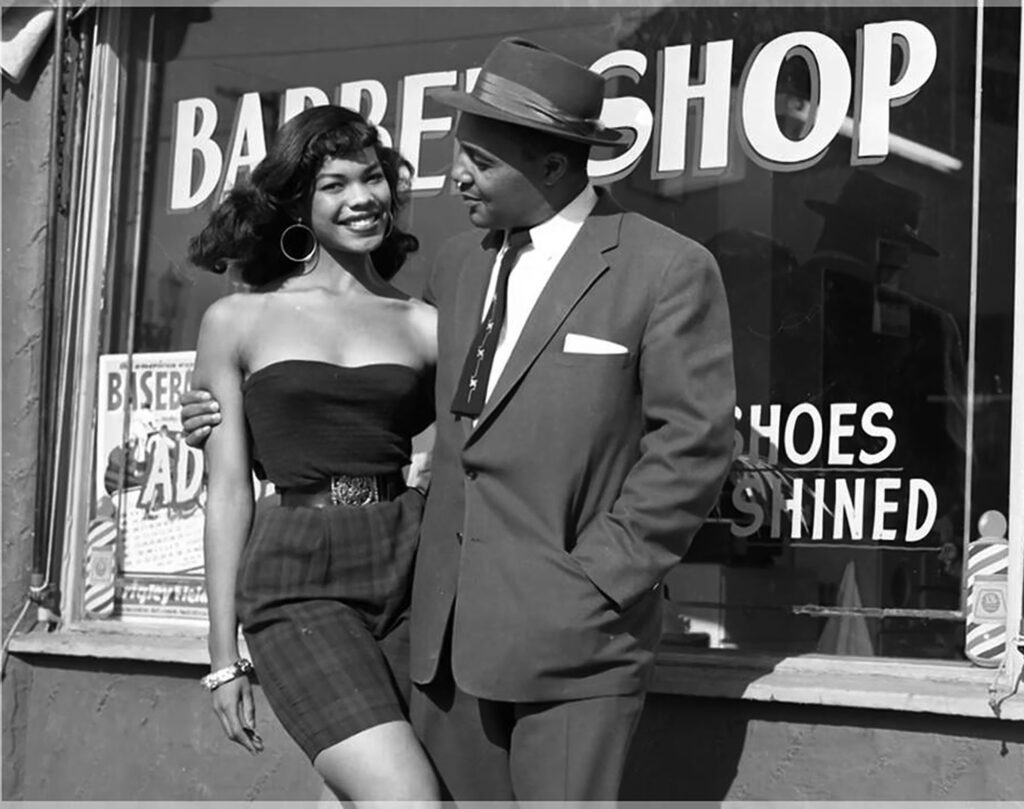
Central Avenue became its heartbeat. A West Coast Harlem, where jazz wasn’t just played—it was defined. Musicians, entrepreneurs, and audiences converged to create a cultural economy that shaped American music itself. Just blocks away, Broadway functioned as a commercial spine, filled with theaters, ballrooms, businesses, and institutions that sustained Black Los Angeles both economically and socially. Your father’s memory of James Brown performing at the 54 Ballroom isn’t just a personal story—it’s evidence of a fully functioning cultural infrastructure. Institutions like Malcolm X’s mosque on Broadway reinforced that this wasn’t just entertainment—it was political, spiritual, and communal life intertwined.
This was not a marginal community.
It was a thriving one.
And then it was disrupted.
The construction of the 110 and 10 freeways cut directly through these thriving corridors, displacing businesses, fracturing neighborhoods, and permanently altering the economic flow of Black Los Angeles. What had once been connected became divided. What had once circulated within the community was redirected outward. Infrastructure, in this case, was not neutral—it reshaped the geography of opportunity.
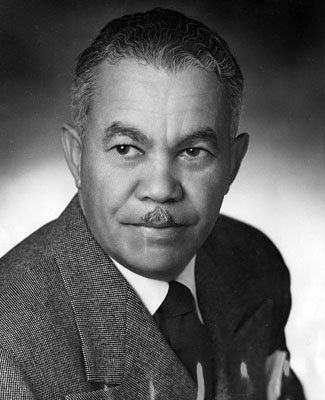
At the same time, Black excellence in Los Angeles continued to reach extraordinary heights. Architect Paul Revere Williams designed some of the most iconic structures in Southern California, leaving a physical imprint on the city that still stands today. Community leaders like Ted Watkins built programs aimed at sustaining economic and social mobility within Black neighborhoods. These were not signs of a community in decline. They were evidence of one still fighting to maintain what it had built.
But beneath that surface, the conditions were shifting.
The story of gangs in Los Angeles is often told as if it begins with Black communities themselves. It does not. Before Black gangs existed, there were organized white groups targeting Black residents—groups like the Spook Hunters in South Central, exclusionary beach gangs in places like Lunada Bay, and broader Southern California gang cultures that included organizations like the Hells Angels. Black gangs did not emerge in isolation. They emerged in response.
As documented in Bastards of the Party, early Black gang formations were rooted less in random violence than in protection—organized responses to a lack of institutional support and external threats. In many cases, those same environments produced political consciousness. Some individuals moved toward organizing, education, and activism, with connections to movements like the Black Panthers, particularly in spaces where access to higher education existed.
But that trajectory did not continue uninterrupted.
The Watts uprising in 1965 marked a turning point—not the beginning of dysfunction, but the breaking point of conditions that had been building for years. What followed was not the reinvestment one might expect in the aftermath of such a moment, but a series of policies and structural shifts that would deepen the divide.
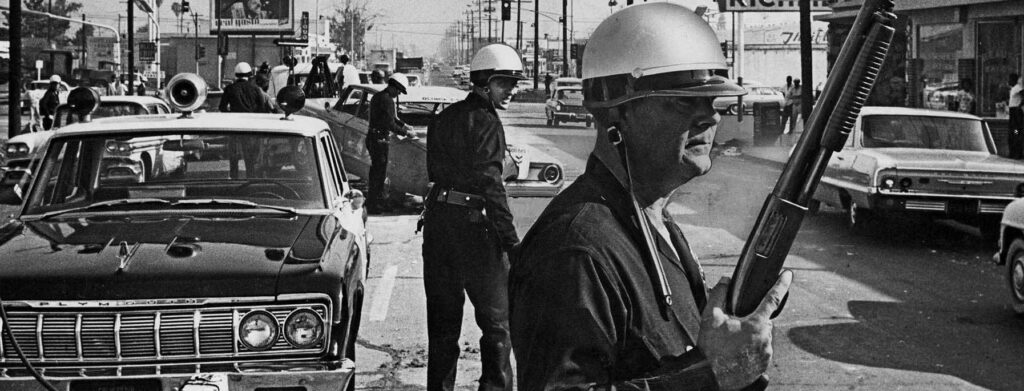
By the late 1970s and into the 1980s, those conditions intensified dramatically. The introduction of crack cocaine into Los Angeles, combined with the federal War on Drugs, transformed entire neighborhoods. Investigative reporting by journalist Gary Webb would later point to the broader systems that intersected with this moment, raising questions about how such conditions were allowed to take hold.
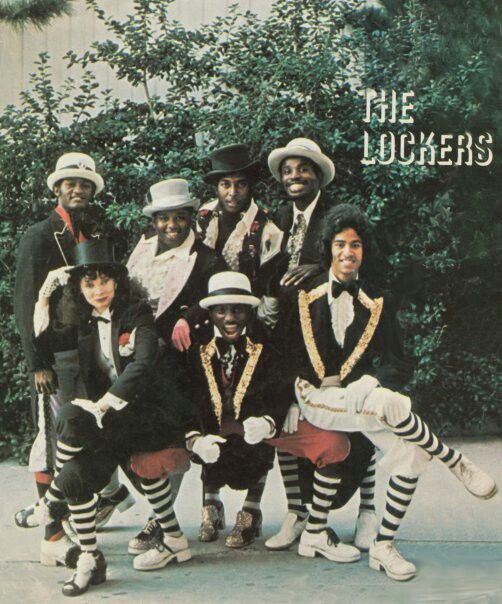
Before this shift, conflict in Los Angeles often played out through culture. Dance crews, performance, and competition—groups like the LA Lockers—provided outlets for identity and rivalry that did not rely on violence. But as the economic and social landscape changed, so did the methods of survival.
Guns replaced dance floors.
Economics shifted overnight.
Groups like the Crips and Bloods formed within this environment—not as isolated cultural phenomena, but as responses to rapidly changing conditions. The music that followed, particularly from artists like N.W.A, did not create this reality—it documented it. Albums like Death Certificate by Ice Cube, released just months before the 1992 uprising, served as warnings as much as they were expressions. They reflected a community already at its breaking point.
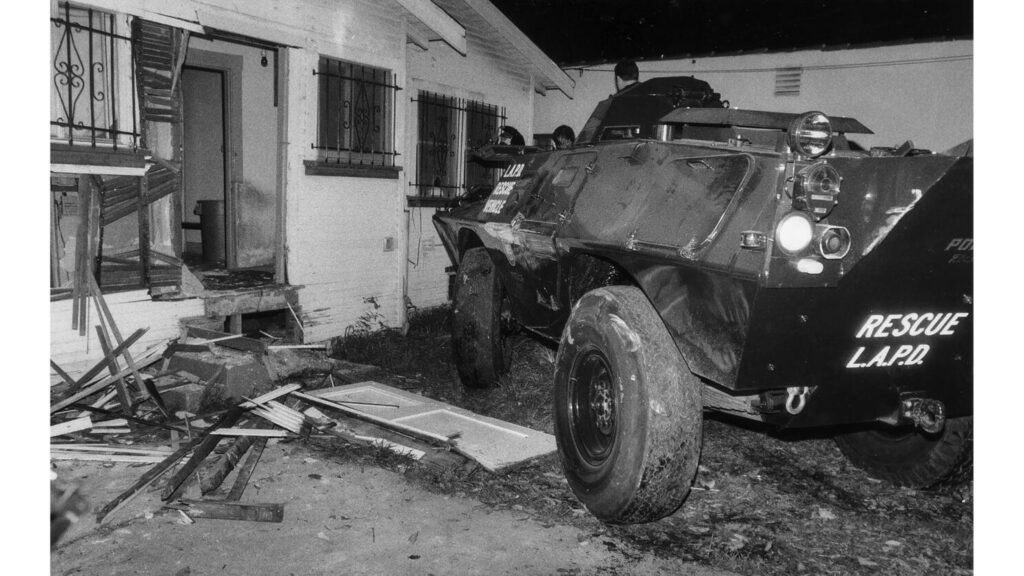
That breaking point came in 1992.
The killing of Latasha Harlins intensified existing tensions. The acquittal of officers in the Rodney King case acted as the spark. But the uprising that followed was not random. It was cumulative—the result of decades of economic displacement, aggressive policing, cultural disruption, and political neglect converging all at once.
And yet, despite all of this, the dominant narrative remained fixed on gangs.
What that narrative fails to account for is what was lost—not just economically, but culturally.
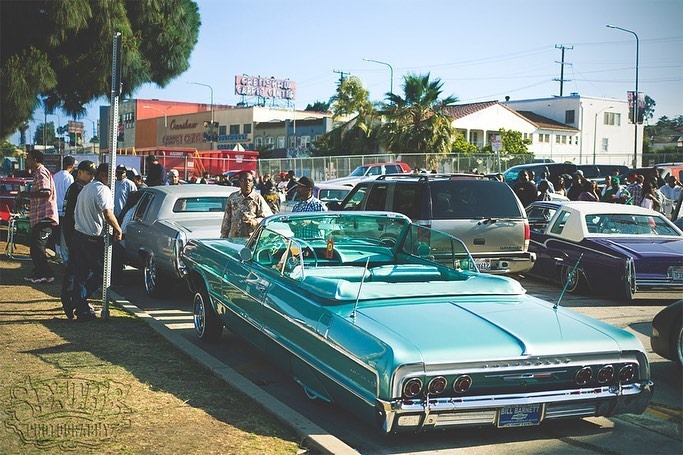
Black Los Angeles once had visible, thriving public culture. Crenshaw Boulevard wasn’t just a street; it was a gathering place. Lowrider culture and cruising represented craftsmanship, pride, and community expression. That culture was effectively shut down through anti-cruising injunctions that made it illegal to pass the same point multiple times within a set period. A cultural tradition was regulated out of existence.
The same pattern extended to everyday spaces. Ladera Center once held informal institutions—places like Starbucks and Friday’s—where elders gathered to play chess, dominoes, and maintain social ties. That Starbucks, at one point among the most profitable in the nation, closed without notice. The Grand Lux Café in Beverly Hills, widely known as a gathering place for Black Angelenos, shut down. Dockweiler Beach, referred to locally as “ethnic beach,” faced increasing pressure and restriction. Between roughly 2012 and 2022, a range of Black gathering spaces—across generations—quietly disappeared.
These were not just businesses.
They were infrastructure for community.
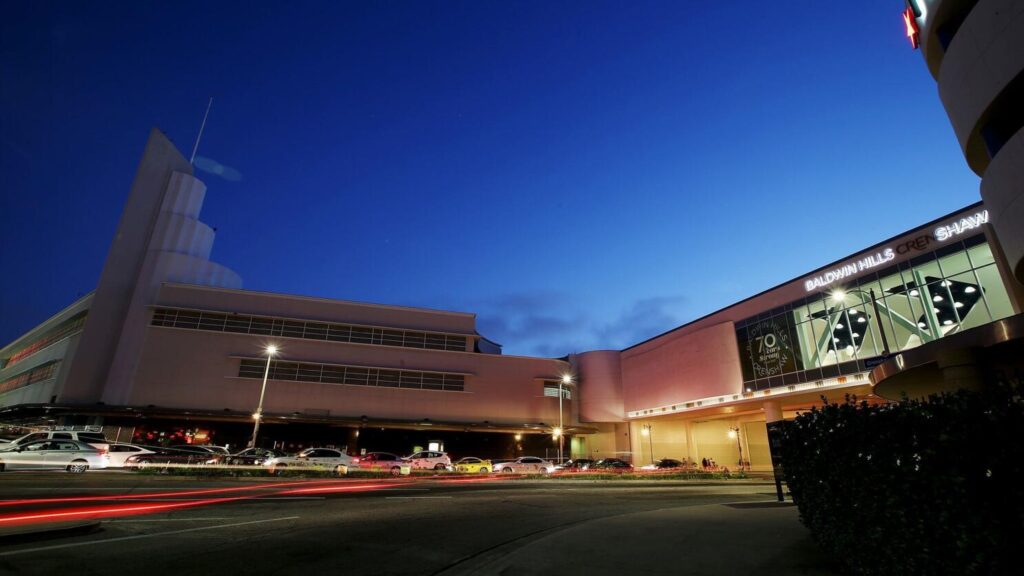
At the level of ownership, the pattern continued. At Baldwin Hills Crenshaw Plaza—one of the most significant commercial centers in Black Los Angeles—a Black-led group reportedly submitted a higher bid, estimated around $120 million. Yet the property was ultimately sold to a non-Black developer for approximately $111 million.
That gap isn’t just a number—it raises a larger question.
Because when a higher bid doesn’t win, the decision isn’t purely economic.
It becomes about control.
Who gets to own, develop, and shape the future of Black Los Angeles—and who doesn’t.
That question of control doesn’t stop at ownership—it extends into leadership.
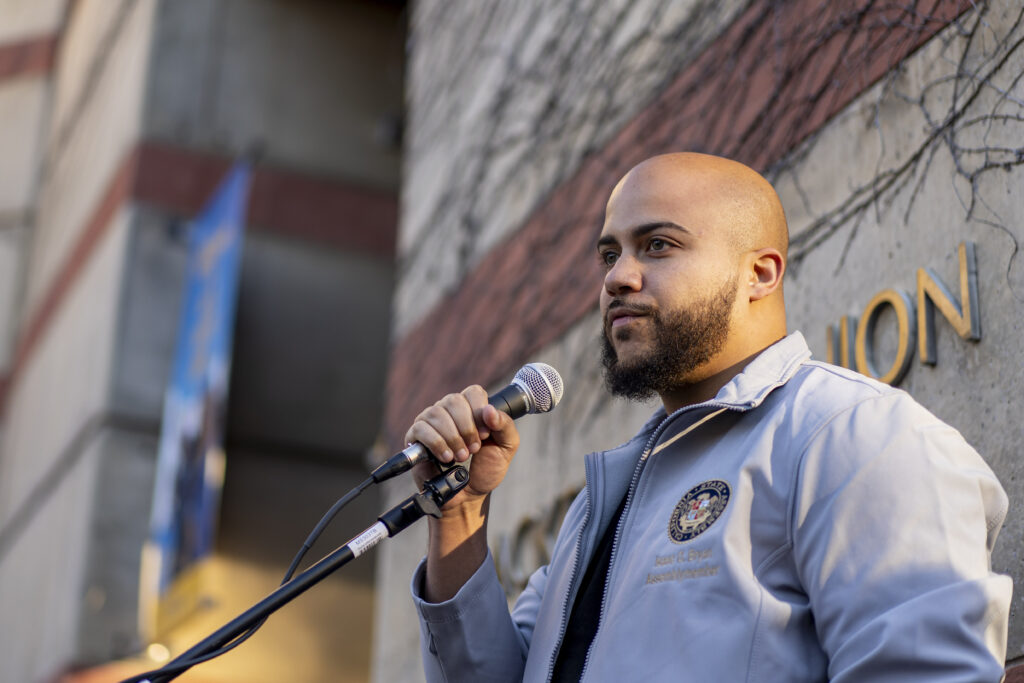
Black Los Angeles has a political class, but too often it has not translated into meaningful support for Black Angelenos on the ground. At the federal level, representation has not consistently produced targeted economic policy that directly addresses the conditions facing Black communities in Los Angeles.
At the state level, the disconnect becomes even more visible. California’s reparations efforts—after years of study, testimony, and legislative work—resulted in bills that passed through the state legislature, only to stall before reaching the governor’s desk. Assemblymember Isaac Bryan played a key role in that breakdown, aligning with Governor Gavin Newsom and effectively blocking momentum at a critical moment.
At the local level, the pattern continues. Black Los Angeles has been vocal about the pressures of gentrification and homelessness, repeatedly calling for targeted solutions. Yet leadership has consistently responded with a universal approach—one that avoids addressing the specific conditions impacting Black communities. Mayor Karen Bass has stated there is little she can do specifically for Black Los Angeles in the face of these challenges.
At the same time, targeted initiatives have been implemented for other groups, including a $1 million program aimed at addressing homelessness within the Asian community.
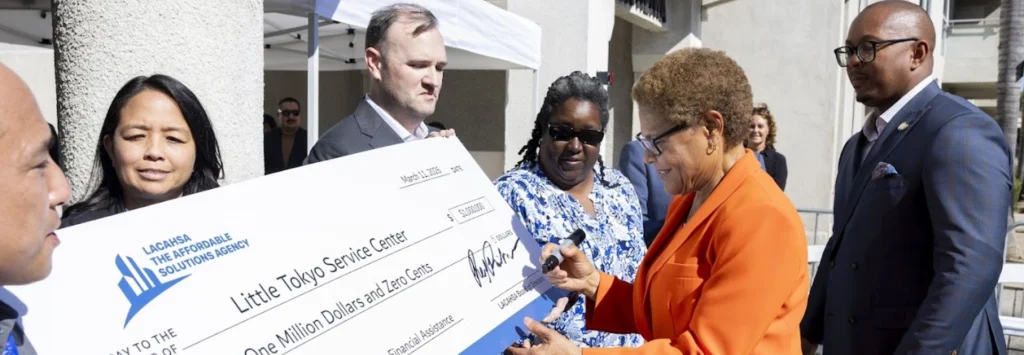
Read more here: https://mayor.lacity.gov/news/mayor-bass-continues-drive-change-protect-renters-and-prevent-homelessness
The pattern is difficult to ignore.
Representation exists—but targeted outcomes do not.
And when political power fails to translate into material change, it raises the same underlying question:
Who is actually being served—and who is not?
Layer in the political dimension, and the picture becomes impossible to ignore. The leaked Los Angeles City Council conversations involving Nury Martinez, Kevin de León, and Gil Cedillo pulled back the curtain on how power is actually exercised in this city. This wasn’t abstract policy—it was strategy. Redistricting wasn’t just about lines on a map; it was about control.

In those recordings, Martinez referred to Black residents as “these people” while discussing how to redraw districts—including areas around USC—making it clear that Black political influence was being treated as something to be managed and reduced. The conversation wasn’t subtle. It exposed a coordinated approach to consolidating power, even if it meant diminishing Black representation.
Read the full report here: https://www.latimes.com/california/story/2022-10-09/city-council-leaked-audio-nury-martinez-kevin-de-leon-gil-cedillo
Economic control follows political control. When districts are redrawn, resources shift. Contracts shift. Development priorities shift. And over time, access shifts with it.
Today, for the first time in roughly 60 years, District 9 no longer has a Black council member.
What makes this even harder to dismiss is that the data now reflects what many have been experiencing for years. Los Angeles County’s “State of Black Los Angeles” report lays out, in plain terms, the disparities across employment, income, housing, health, and access to opportunity. Black residents make up a shrinking share of the county’s population while continuing to face some of the highest barriers to economic mobility. The report doesn’t point to culture as the cause—it points to structural conditions, policy decisions, and systemic gaps that have compounded over time. In other words, the lived experience aligns with the data. For a deeper breakdown of these findings, read the full report here: https://ceo.lacounty.gov/ardi/sbla/?utm_source=chatgpt.com
That didn’t happen in isolation.
It happened through a series of political decisions that reshaped who holds power in Los Angeles—and who no longer does.
That didn’t happen in isolation.
It happened through a series of decisions—political, economic, and strategic—that systematically reduced Black influence in a city Black Angelenos helped build.
Representation shifts.
Access shifts with it.
And that brings the story to the present.

Because today, the same pattern continues—just in a more refined and less visible form. Black Angelenos with degrees, experience, and clean records are still encountering barriers to employment. Hiring practices have evolved, but the outcome has not. “Bilingual preferred” has become a quiet filter, and access to stable public sector jobs has narrowed. And once again, the result is consistent:
Qualified individuals—locked out.
And to be clear, this isn’t about dismissing the value of language skills. But the idea that the solution is simply “learn Spanish” doesn’t hold up in practice. I’ve seen it firsthand. A handful of my friends did exactly that—they learned Spanish, added it to their résumés, and suddenly started getting interviews. But when they showed up, none of them got the job.
So even when you meet the requirement, it still may not be enough.
Which raises a harder question: if qualifications, experience, and even added language skills aren’t translating into opportunity, then what actually determines access?

What makes this harder to ignore is that this isn’t happening to people on the margins. Most Black Angelenos never participated in gang life. They went to school. They earned degrees. They built careers, families, and communities. They followed every prescribed path toward stability—and still ran into the same ceiling.
If gang culture were truly the driving force behind economic struggle, those who never engaged in it would be experiencing different outcomes. Too often, they are not.
That contradiction points to something deeper.
It points to access.
Consider the case of a close friend—armed with a master’s degree from Pepperdine, no criminal history, and a stable family life. For years, he pursued opportunities across the private and public sectors, applying to city, county, and state positions. He did everything right. And still, the door never opened. Eventually, survival required a pivot—moving boxes at UPS, driving Uber—work disconnected from his qualifications but directly tied to the limits of access he encountered.
That experience is not an outlier. It is a pattern.
My own path followed a similar trajectory. I built a nine-year career in banking and lending after starting at Washington Mutual at 18, backed by a degree from Cal State Northridge. When the 2008 financial collapse wiped that out, I spent thirteen months without income, applying everywhere with no response.
At one point, I ran a simple test. I submitted the same résumé under a different name—Don Brown instead of Dwann Brown. Within a month, I received nine interviews. Nothing else had changed. Not the experience. Not the credentials. Only the perception.
But even that access proved conditional. Once I entered the room, the opportunity often disappeared just as quickly. The barriers were layered—first at entry, then at acceptance.
Overlay that with broader structural shifts—most notably the rise of “bilingual preferred” requirements in Los Angeles hiring—and the pattern becomes even clearer. What appears neutral on paper functions in practice as a filter, narrowing access in ways that are rarely acknowledged but consistently felt.
And that lack of access doesn’t stop at employment.
It extends into ownership and community stability. Historically Black neighborhoods like View Park, Ladera Heights, and Windsor Hills are changing—not because the next generation lacks ambition, but because they often lack access to the economic opportunities required to remain. Ownership transitions. The community shifts.
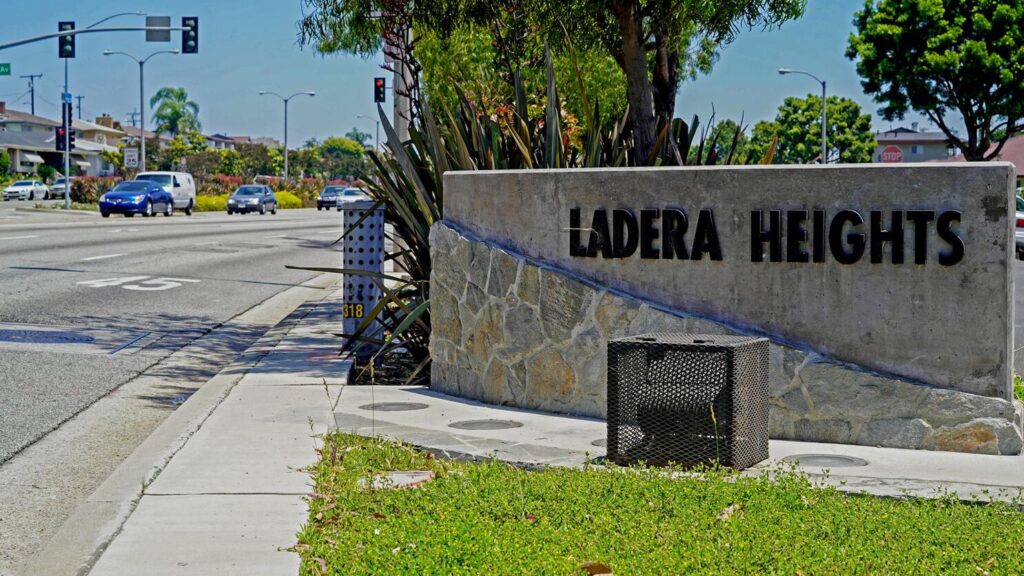
The same pattern playing out across the rest of Black Los Angeles.
None of this is to deny the presence or impact of gang activity. But to center it as the defining explanation is to misunderstand both the history and the present.
Because this story is bigger than gangs.
The silent majority of Black Los Angeles—like the rest of the nation—does not fit the stereotype. We are not gang members, pimps, or hustlers. We are college graduates. We are professionals. We are skilled workers. We are people who followed the path that was laid out—school, work, family, responsibility—and still found ourselves on the outside of the economic picture.
And when that exclusion is questioned, the answer too often circles back to gangs—as if an entire population can be reduced to its most visible minority.
Even that framing doesn’t hold up under scrutiny. Many of the individuals who were involved in gangs as teenagers grew out of it, straightened their lives, and entered the workforce by their twenties. The idea that gangs represent the totality of Black Los Angeles isn’t just inaccurate—it’s convenient.
Because it avoids the real issue.
Gangs and degeneracy exist in every community. They are not unique to Black Los Angeles, and they do not define it. What defines outcomes is access—who gets it, who doesn’t, and how it is distributed over time.
That has always been the throughline.
This is a story of builders and disruption, of culture and displacement, of people who did things the right way and still found the doors closed. It is a story shaped as much by policy, infrastructure, and economic control as anything happening at the street level.
And until that full story is acknowledged, Black Los Angeles will continue to be explained through a narrative that is not only incomplete—but misleading.
Because this was never just about gangs.
It has always been about access.
And who controls it.
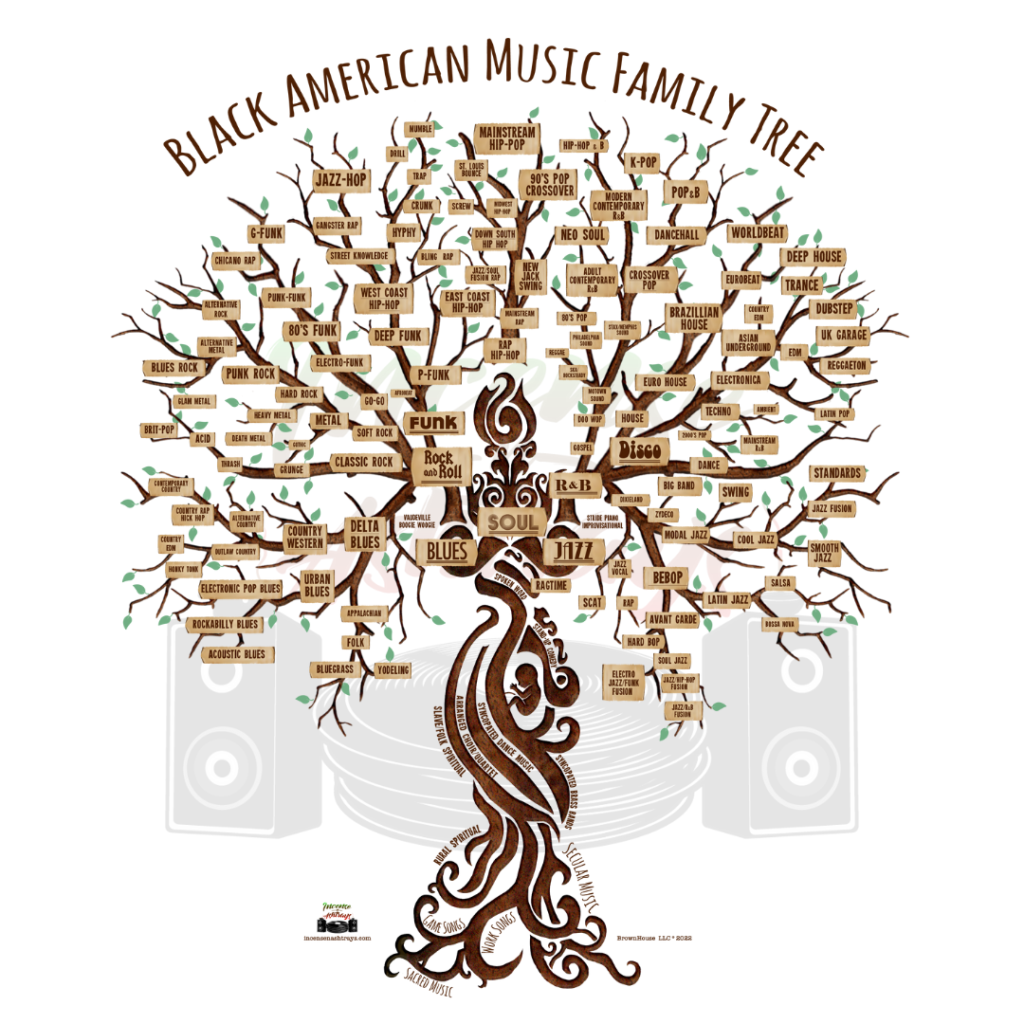
IncenseNashtrays exists to document, preserve, and elevate Black American culture beyond the narratives that limit it. This work is part of a larger mission to protect and teach the true history of American music.
Support the Black American Music Historical Family Tree Foundation here: https://bamfamilytree.org